
For most of my life, pancakes were a weekend fantasy. A forbidden food. I’d see families at diners digging into huge stacks dripping with butter and syrup, and I’d feel a mix of jealousy and superiority. I was on a “diet,” so I couldn’t have that. My ADHD brain loves that kind of black-and-white thinking. All or nothing. This is “good,” that is “bad.” It took me years, and losing over 65 pounds, to unlearn that.
The truth is, you can absolutely have pancakes and reach your fitness goals. You just need a better blueprint. This high-protein buttermilk pancake recipe is the result of that realization. It was born from my desire to enjoy a classic comfort food with my son on a Saturday morning without derailing my progress or starting a craving spiral that would last the rest of the day. These aren’t just a “healthy version” of the real thing. They are the real thing, engineered to work for you, not against you.
They are fluffy, satisfying, and packed with enough protein to keep you full and focused for hours. They are simple enough to make on a low-energy morning and flexible enough to fit into any sustainable fat-loss plan. This is how we build a lifestyle that lasts. We don’t eliminate the foods we love. We rebuild them.
Skip to My Flexibe Diet Recipe!
Why These Buttermilk Pancakes Are Great For Fat Loss
When you’re trying to lose fat, the biggest battles aren’t fought in the gym. They’re fought in your kitchen and in your head, especially when cravings hit. Traditional buttermilk pancakes are a fast track to a blood sugar spike and crash, leaving you hungry and irritable an hour later. That’s a terrible setup for anyone, but for an ADHD brain, it’s a recipe for impulsive snacking and feeling completely derailed. This recipe flips the script entirely.
The foundation of our approach at ADHD FIT is protein first. Each serving of these pancakes is loaded with protein from whey powder and Greek yogurt. Protein is incredibly satiating. It keeps you feeling full and satisfied for much longer than simple carbs. This dramatically reduces the urge to graze on junk food between meals. Managing hunger is more than half the battle, and these pancakes are a powerful tool in your arsenal.
We also swap out regular all-purpose flour for oat flour. Oat flour is a complex carbohydrate, meaning it digests more slowly and provides sustained energy. It also contains fiber, which further aids in satiety and gut health. This combination of high protein and fiber helps stabilize your energy levels, preventing the sharp peaks and valleys that can wreck your focus and mood. You get the comforting taste and texture of a classic buttermilk pancake without the negative metabolic consequences.
This isn’t about restriction. It’s about strategic eating. By starting your day with a meal like this, you set a positive tone. You’ve nourished your body, managed your hunger, and enjoyed something delicious. It makes it so much easier to make smart choices for the rest of the day. This is how you build consistency, which is always more important than short-term intensity.
Ingredients You’ll Need for Buttermilk Pancakes
Building a better pancake starts with better ingredients. We’re not just throwing health food at a wall and hoping it sticks. Each component here is chosen for a specific purpose: to boost protein, manage energy, and deliver that classic fluffy texture we all love. It’s a simple list, and many of these are probably already staples in your fit-pantry.
Here’s exactly what you’ll need:
- 1/2 cup oat flour
- 1/4 cup vanilla or unflavored whey protein powder
- 1 teaspoon baking powder
- 1/2 teaspoon baking soda
- 1/4 teaspoon salt
- 1 large egg
- 1/4 cup plain non-fat Greek yogurt
- 1/2 cup low-fat buttermilk
- 1 tablespoon unsweetened almond milk
- 1 teaspoon vanilla extract
- 1 tablespoon monk fruit sweetener or stevia equivalent
- Cooking spray or a small amount of coconut oil for the griddle
The key players here are the whey protein powder and Greek yogurt. They are the protein powerhouses that transform these from a carb-heavy breakfast into a muscle-building, fat-loss-friendly meal. When choosing a protein powder, a whey blend (like a concentrate or isolate) works best for baking as it keeps the pancakes from getting too dry. Vanilla flavor adds a nice sweetness, but unflavored is fine too if you want to control the taste more.
Don’t skip the buttermilk! It’s essential for the flavor and texture of a true buttermilk pancake. The acid in the buttermilk reacts with the baking soda to create carbon dioxide bubbles, which is what makes the pancakes light and fluffy. Low-fat buttermilk gives you all the benefits without adding significant fat. If you don’t have oat flour, you can easily make your own by blending old-fashioned rolled oats in a blender until they reach a fine, flour-like consistency. It’s a great, cost-effective shortcut.
How To Make Buttermilk Pancakes (Step-By-Step)
We need our recipes to be straightforward. No complex techniques or a million bowls to wash. This process is designed to be as simple as possible, perfect for those mornings when executive function is low but you still want a great meal. The most important thing is not to overthink it. Just follow the steps, and you’ll be golden.
Step 1: Combine The Dry Ingredients
In a medium-sized bowl, add your oat flour, protein powder, baking powder, baking soda, and salt. Use a whisk to mix them together thoroughly. This is a crucial step. Ensuring the leavening agents (baking powder and soda) are evenly distributed is key to a uniform rise. If you skip this, you can get flat spots or pancakes with a bitter, soapy taste in one bite. An ADHD-friendly tip: mix a big batch of just the dry ingredients and store it in an airtight container. Then, when you want pancakes, you just scoop out what you need and add the wet ingredients. Less steps, less friction.
Step 2: Whisk The Wet Ingredients
Grab a second, smaller bowl. Crack in the egg and give it a quick whisk. Then add the Greek yogurt, buttermilk, almond milk, vanilla extract, and your sweetener of choice. Whisk everything together until it’s smooth and well combined. This ensures the egg and yogurt are fully incorporated, which leads to a better texture and prevents random clumps of cooked egg in your finished pancakes.
Step 3: Gently Mix Wet and Dry
Pour the wet mixture into the bowl with the dry ingredients. Now, this is important: mix gently with a spatula or wooden spoon until the ingredients are just combined. A few lumps in the batter are perfectly fine. In fact, they are good! Overmixing develops the gluten in any residual flour and can make the protein powder tough, resulting in dense, rubbery pancakes instead of light, fluffy ones. Resist the urge to stir it until it’s perfectly smooth.
Step 4: Let The Batter Rest
Patience is a virtue, even with pancakes. Let the batter sit on the counter for about 5 to 10 minutes. This gives the oat flour time to hydrate and the baking powder time to activate. The batter will thicken up noticeably. This resting period is one of the biggest secrets to getting a fluffy, tender buttermilk pancake. Don’t skip it. Use this time to heat your griddle and grab your toppings.
Step 5: Cook The Pancakes
Heat a non-stick skillet or griddle over medium-low heat. Getting the temperature right is key. Too high, and the outside will burn before the inside is cooked. Too low, and they won’t brown properly. Lightly coat the surface with cooking spray or a dab of coconut oil. Pour about 1/4 cup of batter for each pancake. Cook for 2 to 3 minutes, or until you see bubbles forming on the surface and the edges look dry and set. Flip carefully and cook for another 1 to 2 minutes on the other side until golden brown. Serve them up immediately.
How To Serve Buttermilk Pancakes (ADHD-Friendly)
How you serve your pancakes can be just as important as the recipe itself, especially when you have ADHD. Decision fatigue is real, particularly in the morning. Having a simple, go-to “serving formula” removes the guesswork and helps you build a balanced meal without having to think too hard. We want to add flavor, texture, and extra nutrients without adding a ton of steps or sugar.
My strategy is to focus on toppings that boost the meal’s macros and require zero cooking. This makes the entire process faster and reduces the chance of getting sidetracked. A pre-made “topping station” can be a lifesaver. Keep these items together in your fridge or pantry so you can just grab and go.
Here are a few of my favorite ADHD-friendly topping combinations:
- The Protein Power-Up: Top your pancakes with a big scoop of plain non-fat Greek yogurt and a handful of fresh or frozen berries. The yogurt adds even more protein and a creamy, tangy contrast, while the berries provide fiber and antioxidants. Frozen berries are a great freezer hack; they are cheap, last forever, and taste amazing as they melt onto the warm pancakes.
- The Healthy Fats Boost: Add a small handful of chopped walnuts or pecans and a sprinkle of chia seeds or ground flaxseed. This adds healthy omega-3 fats, more fiber, and a satisfying crunch. The fats will also help keep you full for even longer. A tiny drizzle of pure maple syrup here is perfectly fine.
- The Simple Classic: If you’re short on time or ingredients, just a smear of natural peanut or almond butter is a fantastic option. It provides healthy fats and a bit of extra protein. Look for brands with no added sugar. This is my go-to on really busy mornings.
The goal is to create a repeatable system. Find one or two combinations you love and stick with them. This removes the mental load of inventing a new meal every morning and makes it incredibly easy to stay consistent with your nutrition goals, even on days when your brain feels like it’s running on empty.
How To Store, Reheat, and Reuse Buttermilk Pancakes
One of the best strategies for anyone with ADHD is to “cook once, eat twice.” Or three times. Making things easier for your future self is a superpower. These buttermilk pancakes are perfect for meal prep, ensuring you have a high-protein, delicious breakfast ready to go on those mornings when you just can’t face cooking from scratch. A little work on Sunday can save you from a week of grabbing sugary cereal or skipping breakfast entirely.
Once the pancakes have cooked and cooled completely, you can store them for later. Proper storage is key to making sure they taste just as good reheated as they did fresh off the griddle. Avoid stacking warm pancakes directly on top of each other, as the steam will make them soggy.
Here are the best ways to store and reheat your pancakes:
- Refrigerating: For short-term storage, place the cooled pancakes in an airtight container or a zip-top bag. They will keep well in the refrigerator for up to 3-4 days. You can place a small piece of parchment paper between each one to prevent them from sticking together, which makes grabbing one or two much easier.
- Freezing: For long-term storage, freezing is the way to go. Lay the cooled pancakes in a single layer on a baking sheet and pop them in the freezer for about 30 minutes, or until they are firm. This is called flash-freezing, and it prevents them from clumping into one giant pancake brick. Once frozen, transfer them to a freezer-safe bag or container. They’ll last for up to 3 months.
- Reheating: You have a few great options here. For the best texture, use a toaster or toaster oven. They’ll get slightly crispy on the outside and stay soft on the inside. You can also reheat them in the microwave for about 30-60 seconds, but they will be softer. An air fryer also works wonderfully; a couple of minutes at around 350°F (175°C) will make them taste freshly made.
Having a stash of these in the freezer is a game-changer. It’s a grab-and-go breakfast that aligns with your fat loss goals and saves you precious time and mental energy on busy weekday mornings. It’s a practical system that works with your brain, not against it.
Easy Swaps & Variations for Buttermilk Pancakes
A flexible recipe is a sustainable recipe. Life happens. You run out of an ingredient, or you have specific dietary needs. The great thing about this buttermilk pancake recipe is that it’s incredibly forgiving and easy to adapt. You can easily tweak it based on what you have in your kitchen or your personal preferences without sacrificing the amazing taste and high-protein benefits.
Working with your ADHD brain means reducing friction. If you have to make a special trip to the store for one ingredient, you’re less likely to make the recipe at all. So let’s talk about some simple, practical swaps you can make. These variations will help you keep this recipe in your regular rotation, no matter what.
Here are some of the easiest and most effective swaps:
- Gluten-Free Buttermilk Pancakes: The recipe is already pretty close! Just make sure you are using certified gluten-free oat flour and that your baking powder is also certified GF. The rest of the ingredients are naturally gluten-free.
- Dairy-Free Buttermilk Pancakes: This is a simple fix. Swap the whey protein for a quality plant-based protein powder (a blend of pea and rice protein works well for texture). Use a dairy-free Greek-style yogurt (like one made from coconut or almond) and replace the low-fat buttermilk with a “mock” buttermilk made by mixing 1/2 cup of unsweetened almond milk with 1/2 tablespoon of lemon juice or apple cider vinegar. Let it sit for 5 minutes to curdle before using.
- Different Flours: If you don’t have oat flour, you can experiment with whole wheat pastry flour or a 50/50 mix of all-purpose and whole wheat flour. The texture and macros will change slightly, but the pancakes will still be delicious and more nutritious than a standard recipe.
- Flavor Add-Ins: Get creative! Add 1/4 teaspoon of cinnamon or a pinch of nutmeg to the dry ingredients for a warmer flavor. You can also fold in a handful of blueberries, mashed banana (use a little less buttermilk if you do), or sugar-free chocolate chips into the batter right before cooking.
Remember, the goal is consistency, not perfection. Use what you have, make it work for you, and enjoy the process. A good-enough pancake you actually make is infinitely better than a “perfect” recipe that stays on the page.
High-Protein Buttermilk Pancakes
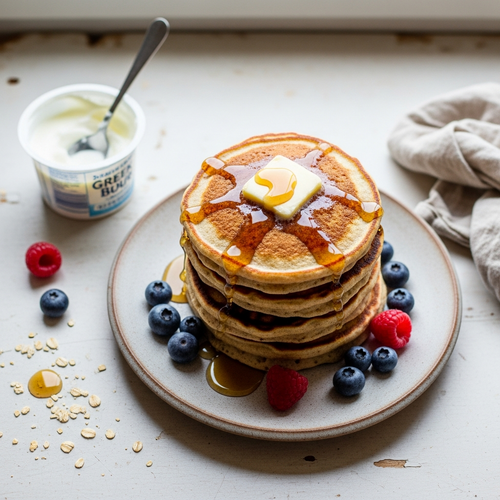
Description: Fluffy, satisfying buttermilk pancakes packed with protein to support fat loss and keep you full for hours. The perfect sustainable breakfast for a fit lifestyle.
Prep Time: 5 minutes | Cook Time: 10 minutes
Servings: 1 (makes about 4 medium pancakes)
Macros per Serving | Calories: 410 | Protein: 41g | Fat: 10g | Carbohydrates: 38g
Ingredients
- 1/2 cup oat flour
- 1/4 cup vanilla or unflavored whey protein powder
- 1 teaspoon baking powder
- 1/2 teaspoon baking soda
- 1/4 teaspoon salt
- 1 large egg
- 1/4 cup plain non-fat Greek yogurt
- 1/2 cup low-fat buttermilk
- 1 tablespoon unsweetened almond milk
- 1 teaspoon vanilla extract
- 1 tablespoon monk fruit sweetener or stevia equivalent
- Cooking spray or a small amount of coconut oil for the griddle
Instructions
- In a medium bowl, whisk together the oat flour, protein powder, baking powder, baking soda, and salt.
- In a separate small bowl, whisk the egg, Greek yogurt, buttermilk, almond milk, vanilla extract, and sweetener.
- Pour the wet ingredients into the dry and stir gently until just combined. Do not overmix.
- Let the batter rest for 5-10 minutes to thicken.
- Heat a non-stick griddle over medium-low heat. Lightly coat with cooking spray.
- Pour 1/4 cup of batter per pancake and cook for 2-3 minutes per side, until golden brown and cooked through.
- Serve immediately with your favorite healthy toppings.
Notes
The batter will be thicker than traditional pancake batter; this is normal. Do not skip the resting step, as it’s crucial for a fluffy texture. For meal prep, allow pancakes to cool completely before storing in the fridge or freezer.
FAQs About Buttermilk Pancakes For Weight Loss
Here are some straightforward answers to the most common questions I receive about this buttermilk pancake recipe.
Can I really eat these buttermilk pancakes and lose weight?
Yes, absolutely. This is one of the most important mindset shifts for sustainable fat loss. It’s not about which foods you eat, but what those foods are made of and how they fit into your overall daily intake. Weight loss comes down to being in a consistent calorie deficit, and the best way to maintain that deficit without feeling miserable is by eating foods that keep you full and satisfied.
These buttermilk pancakes are specifically designed for that purpose. They are high in protein, which is the most satiating macronutrient. Eating a high-protein breakfast helps control hunger and cravings for the rest of the day, making it much easier to stick to your calorie goals. They also use oat flour, a complex carb that provides steady energy, unlike the sugar crash you get from traditional pancakes. So yes, you can and should enjoy foods like this while losing weight, because it makes the entire process more enjoyable and sustainable.
How can I make these buttermilk pancakes without protein powder?
If you don’t have or don’t want to use protein powder, you can still make a healthier version of buttermilk pancakes. The protein content will be lower, so they may not be quite as filling, but they will still be a great option. To make them without protein powder, simply replace the 1/4 cup of protein powder with an equal amount of oat flour or whole wheat flour. The total flour will now be 3/4 cup.
To help make up for the lost protein, you can make adjustments to your toppings. Serve the pancakes with a larger scoop of non-fat Greek yogurt (which is packed with protein) or have a side of scrambled egg whites or turkey sausage. This way, you’re still getting a solid protein-focused meal to start your day, even without the powder in the batter itself. The recipe is a template, and you can definitely adjust it to fit your pantry and preferences.
Why are my protein buttermilk pancakes dry or rubbery?
This is the most common issue people have with protein pancakes, and it almost always comes down to one of two things: overmixing the batter or overcooking the pancakes. Protein powder, especially whey, can become tough and rubbery when it’s overworked or exposed to high heat for too long. When you combine the wet and dry ingredients, stir only until they are just incorporated. Lumps are your friend! A lumpy batter means you haven’t overdeveloped the gluten and protein strands, which leads to a tender pancake.
The second culprit is heat management. You must cook these pancakes on medium-low heat. If your pan is too hot, the outside will cook way too fast, and you’ll be forced to either burn them or leave the inside undercooked. By the time the center is done, the outside will be overcooked and dry. Cooking them low and slow allows the inside to cook through gently, keeping the entire pancake moist and fluffy. Be patient with the cooking process, and you’ll be rewarded with a perfect texture.
Are these buttermilk pancakes good for meal prep?
They are fantastic for meal prep. In fact, I designed them with that in mind. Having a healthy, pre-made breakfast is one of the best ways to combat decision fatigue and stay on track, especially on busy weekday mornings when ADHD symptoms can make starting tasks feel overwhelming. These pancakes hold up incredibly well in both the fridge and the freezer, so you can make a double or triple batch over the weekend and be set for days.
The key is to let them cool completely before storing them. If you stack them while they’re still warm, the trapped steam will make them soggy. Once cool, you can refrigerate them for up to 4 days or freeze them for up to 3 months. I recommend flash-freezing them on a baking sheet before transferring them to a bag, so they don’t stick together. This makes it easy to grab exactly how many you need. Reheating them in a toaster gives them the best texture.
What kind of oat flour is best for this buttermilk pancake recipe?
You have a couple of great options, and neither one is complicated. You can buy pre-made oat flour, which is usually found in the baking or gluten-free aisle of most grocery stores. This is the most convenient option, as the flour is very fine and consistent, which can lead to a slightly smoother pancake texture. Any brand of plain oat flour will work perfectly fine in this recipe.
However, the most cost-effective and practical method is to make your own. Simply take old-fashioned rolled oats (not steel-cut or instant) and blend them in a high-speed blender or food processor until they form a fine, powdery flour. It only takes about 30 seconds. I do this all the time. One cup of rolled oats yields about one cup of oat flour. This is a great ADHD-friendly hack because you only need to keep one type of oats in your pantry for both oatmeal and baking.
Try These High-Protein Recipes Next
If you loved these pancakes, here are a few other simple, high-protein recipes designed to help you reach your goals without feeling deprived.
- The Perfect Protein Pancake Recipe For ADHD: My original go-to protein pancake recipe that is simple, macro-friendly, and a staple in our community.
- The Easiest Fluffy Pancake Recipe Ever: Another take on fluffy pancakes, focusing on a slightly different texture and ingredient profile while still being packed with protein.
- Easy Fluffy Buttermilk Pancakes from This Gal Cooks: A fantastic traditional buttermilk pancake recipe. You can easily adapt it by adding protein powder and swapping the flour to fit your macros.
Building a collection of go-to recipes is key to long-term success, so give these a try on your next breakfast adventure.