
I used to think that losing weight meant eating boring, bland food forever. My early fitness journey was filled with dry chicken breast and steamed broccoli. It was miserable, and with my ADHD, the motivation to stick with something so joyless lasted about five minutes.
Everything changed when I rediscovered my love for a good chicken stir fry. It was the perfect meal. It was fast, which my impatient brain loved. It was packed with flavor, which satisfied my need for dopamine. And it was endlessly flexible, so I never got bored.
But the takeout versions were loaded with sugar, sodium, and mystery oils that stalled my fat loss. So, I set out to create a version that delivered all the taste I craved without the baggage. This recipe is the result of years of tweaking, first on my own 65-pound weight loss journey without meds, and then refining it further once I started medication.
It’s brutally practical. It works with your ADHD brain, not against it. It’s designed for those days when your executive function is at zero, but you still want a meal that moves you closer to your goals. This isn’t just a recipe; it’s a system for a delicious, sustainable win.
Skip to My Flexibe Diet Recipe!
Why Chicken Stir Fry Is Great For Fat Loss
Let’s be direct. When it comes to fat loss, the food you eat accounts for about 75 percent of your results. Workouts are important, but you can’t out-train a bad diet. That’s why finding meals that are both effective and enjoyable is the single most important part of the puzzle. This chicken stir fry is engineered to be exactly that.
First, we lead with protein. The chicken breast in this dish is the star player for a reason. Protein is incredibly satiating, meaning it keeps you feeling full and satisfied for longer. This is a game-changer for managing the random cravings and hunger pangs that can derail our best intentions. A high-protein meal sends a signal to your brain that you are fueled, reducing the urge to snack on junk later.
Second, this meal is packed with vegetables. We’re talking broccoli, bell peppers, snow peas, and carrots. This isn’t just for vitamins. All these veggies add a ton of volume to your plate for very few calories. You get to eat a huge, satisfying bowl of food that fills you up without filling you out. For those of us who struggle with portion control, volume eating is a powerful strategy.
Finally, it crushes takeout cravings. The savory and slightly sweet sauce hits all the same flavor notes as your favorite Chinese restaurant, but with a tiny fraction of the sugar, oil, and sodium. This isn’t about restriction. It’s about substitution. By having a delicious, healthy alternative ready to go, you kill the temptation to order something that will set you back. It’s a sustainable system, not a temporary diet.
Ingredients You’ll Need for Chicken Stir Fry
The best recipes are the ones that use simple, accessible ingredients. We don’t have the mental bandwidth for a scavenger hunt every time we want to cook. This ingredient list is designed to be straightforward, with plenty of room for easy swaps. It’s all about working with what you have.
The key to a restaurant-quality sauce without the junk is using low-sodium soy sauce or tamari. This is non-negotiable for me. Regular soy sauce can turn your healthy meal into a salt bomb, leaving you feeling bloated and thirsty. The low-sodium version gives you all the savory, umami flavor while keeping your health goals in check. It’s a simple switch that makes a huge difference.
Here’s exactly what you’ll need to pull this together.
- For the Chicken and Marinade:
- 1 lb boneless, skinless chicken breasts, cut into 1-inch pieces
- 1/4 cup low-sodium soy sauce or tamari
- 1 tablespoon honey or maple syrup
- 1 tablespoon rice wine vinegar
- 1 teaspoon sesame oil
- 2 cloves garlic, minced
- 1 teaspoon fresh ginger, grated
- 1/2 teaspoon red pepper flakes (optional)
- For the Stir Fry:
- 1 tablespoon avocado oil or olive oil
- 1 large head of broccoli, cut into florets
- 1 red bell pepper, julienned
- 1 yellow bell pepper, julienned
- 1 cup snow peas
- 1/2 cup shredded carrots
- 4 green onions, sliced, whites and greens separated
- 1 tablespoon cornstarch or arrowroot powder mixed with 2 tablespoons of water (slurry)
- For Garnish (Optional):
- Toasted sesame seeds
- Sliced green onions (the green parts)
A quick note on the veggies. Fresh is great, but let’s be real. On low-motivation days, chopping feels like climbing a mountain. Don’t hesitate to use pre-cut vegetables from the store or even a bag of frozen stir-fry mix. The goal is consistency, not perfection. A meal made with frozen veggies is infinitely better than giving up and ordering a pizza.
How To Make Chicken Stir Fry (Step-By-Step)
Cooking with ADHD means we need a clear, simple process. Too many steps or complicated techniques, and we’re likely to get overwhelmed and abandon ship. This method is designed to be as streamlined as possible, breaking down the process into manageable chunks so you can stay focused from start to finish.
Step 1: Create the Marinade
In a medium-sized bowl, you’re going to combine all your marinade ingredients. That’s the low-sodium soy sauce, honey or maple syrup, rice vinegar, sesame oil, minced garlic, grated ginger, and optional red pepper flakes. Whisk them together until everything is well combined. This is your flavor base, and it does double duty as both a marinade for the chicken and the foundation for your final sauce.
Step 2: Marinate The Chicken
Add your cut-up chicken pieces to the bowl with the marinade. Give it a good toss to make sure every piece is coated. Now, let it sit for at least 15-20 minutes. This is a crucial step. It’s not just about adding flavor; the salt and acidity in the marinade start to tenderize the chicken, ensuring it stays juicy. Here’s an ADHD tip: while the chicken is marinating, use that “waiting time” to prep your vegetables. This is called task-stacking and it makes the process feel much faster.
Step 3: Cook The Chicken
Heat your avocado or olive oil in a large skillet or wok over medium-high heat. You want the pan to be hot before you add anything. A hot pan is the secret to getting a good sear. Remove the chicken from the marinade, letting the excess drip back into the bowl. We’re saving that leftover marinade. Place the chicken in the skillet in a single layer. Don’t overcrowd the pan. If you do, the chicken will steam instead of brown. Cook for 3-5 minutes per side, then remove it and set it aside.
Step 4: Stir-Fry The Vegetables
Toss your broccoli, bell peppers, and carrots into that same hot skillet. Stir-fry them for about 5-7 minutes. You’re looking for them to become tender-crisp, not mushy. They should still have a little bite. After that, add the whites of the green onions and the snow peas, cooking for just another minute or two. These are more delicate and don’t need as much time.
Step 5: Bring It All Together
Return the cooked chicken to the skillet with all those beautiful vegetables. Now, grab that bowl with the reserved marinade. Add your cornstarch slurry (the cornstarch mixed with water) to the marinade and whisk it quickly. Pour this mixture into the skillet. Stir everything constantly as you bring it to a simmer. You will see the sauce magically thicken in just 1-2 minutes, coating everything in a glossy, delicious glaze. This is the moment it all comes together.
Step 6: Finish and Serve
Once the sauce has thickened, remove the skillet from the heat. Stir in the green parts of your sliced green onions for a final burst of fresh flavor. Garnish with some toasted sesame seeds if you’re feeling fancy, and it’s ready to serve. You just made a healthy, incredible meal in under 30 minutes.
How To Serve Chicken Stir Fry (ADHD-Friendly)
One of the biggest challenges for the ADHD brain is food boredom. Eating the same thing the same way every day is a recipe for quitting. That’s why flexibility in how you serve your meals is so important. It keeps things interesting and gives you a sense of control, which can be a huge motivator.
Think of this chicken stir fry as your base. From here, you can build your bowl in a few different ways depending on your energy level, your macro goals for the day, and what you’re craving. This simple act of customizing your plate can make a meal feel new and exciting, even if it’s leftovers.
Here are a few brutally practical ways to serve it up:
- The Classic: Serve your chicken stir fry over a bed of brown rice or quinoa. For a huge ADHD-friendly shortcut, use the frozen, steam-in-a-bag kind. It takes 3 minutes in the microwave and requires zero thinking or cleanup. This is my go-to for a balanced post-workout meal.
- The Low-Carb Powerhouse: If you’re managing your carb intake, serve this over a generous portion of cauliflower rice. Again, the frozen steamable bags are your best friend here. It bulks up the meal and soaks up the delicious sauce perfectly.
- The Volume Hack: For maximum fullness on minimum calories, serve the stir fry over a big bed of shredded cabbage or mixed greens. The warmth from the stir fry will slightly wilt the greens, and the crunch adds an amazing texture. It’s a massive, satisfying salad.
- The “I Can’t Even” Bowl: Some days, you just don’t have it in you. On those days, scoop it straight from the pan into a bowl and eat it just like that. No sides needed. This is still a complete, nutrient-dense meal. Done is better than perfect, always.
By having these options in your back pocket, you can adapt the meal to fit your needs on any given day. This adaptability is the key to long-term consistency and success.
How To Store, Reheat, and Reuse Chicken Stir Fry
Meal prep is one of the most powerful tools for anyone trying to lose fat, but it’s especially critical for those of us with ADHD. When you have a healthy, delicious meal ready and waiting in the fridge, you eliminate the decision fatigue that often leads to ordering takeout. This chicken stir fry is perfect for meal prep.
The goal is to make your future self’s life as easy as possible. When you’re tired and hungry after a long day, you want a solution that takes less effort than opening a food delivery app. Prepping this meal ahead of time is a gift you give yourself.
Here’s how to handle storage and reheating for the best results:
- Storing: Once the stir fry has cooled slightly, portion it out into airtight containers. I highly recommend using clear glass containers. This helps prevent “object permanence” issues in the fridge. If you can see the delicious food, you’re much more likely to remember it’s there and eat it. It will stay fresh in the fridge for up to 4 days.
- Reheating on the Stovetop: This is the best method for reviving the texture. Heat a non-stick skillet over medium heat, add the leftovers, and stir for a few minutes until heated through. The sauce will thicken up again nicely and the veggies will get a little of their crispness back.
- Reheating in the Microwave: This is the fastest and most convenient option. Place the stir fry in a microwave-safe bowl and cover it loosely to prevent splatters. I like to add a splash of water or broth before heating to help steam the food and keep the chicken from drying out. Heat for 60-90 seconds, stir, and heat for another 30 seconds if needed.
Don’t be afraid to reuse the leftovers in new ways. You can pile the cold stir fry onto a salad for a quick lunch, or wrap it up in a low-carb tortilla with a little extra sriracha. This keeps things from feeling repetitive and helps you stick with your plan.
Easy Swaps & Variations for Chicken Stir Fry
One of our core principles at ADHD FIT is that flexible eating always wins. A rigid plan is a fragile plan, especially for an ADHD brain that craves novelty. This chicken stir fry recipe is designed to be a template, not a strict set of rules. You can and should adapt it based on what you have on hand, what’s on sale at the store, or what you’re in the mood for.
Don’t ever let a missing ingredient be the reason you abandon a healthy meal. Thinking on your feet and making smart substitutions is a skill that will serve you well on your fitness journey. It builds confidence and makes healthy eating feel less like a chore and more like a creative process.
Here are some simple, pre-approved swaps you can make:
- Protein Power-Up: The recipe calls for chicken breast, but this works beautifully with other proteins. Try using boneless, skinless chicken thighs for more flavor and healthy fats, lean steak strips, or even shrimp. For a plant-based option, a block of extra-firm tofu, pressed and cubed, is fantastic.
- Veggie Overload: The vegetable combination in the recipe is a classic, but feel free to go wild here. Use whatever you have in your fridge. Mushrooms, zucchini, bok choy, edamame, or baby corn are all excellent additions. The absolute easiest swap? A big bag of frozen stir-fry vegetable mix. No chopping required.
- Sauce Simplifiers: If you’re out of a sauce ingredient, don’t panic. No honey? Maple syrup or a brown sugar substitute works. No rice vinegar? A squeeze of fresh lime juice will provide the acidity. You can also use coconut aminos instead of soy sauce for a soy-free version. The key is to keep the balance of savory, sweet, and acidic.
- Heat It Up: If you like your food spicy, feel free to increase the red pepper flakes. You can also add a tablespoon of sriracha or chili garlic sauce to the marinade for an extra kick that will really wake up your taste buds.
Embracing these variations will not only save you from extra trips to the store but will also help you discover new flavor combinations you love. It’s all about making the plan work for you.
ADHD-Friendly Chicken Stir Fry
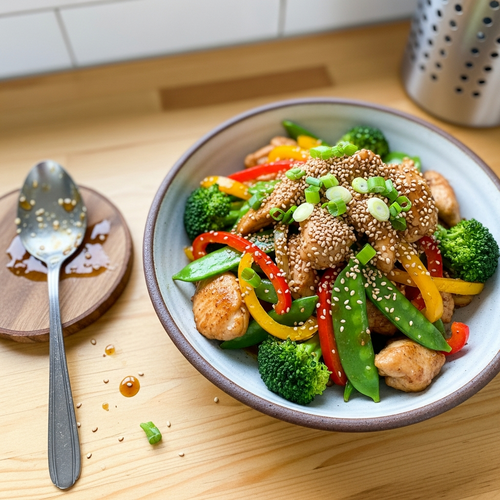
Description: A quick, high-protein chicken stir fry with a savory-sweet sauce that crushes takeout cravings. This recipe is designed to be simple, flexible, and perfect for busy weeknights, helping you hit your fat loss goals without eating boring food.
Prep Time: 15 minutes | Cook Time: 15 minutes
Servings: 4
Macros per Serving | Calories: 300 | Protein: 35g | Fat: 10g | Carbohydrates: 20g
Ingredients
- 1 lb boneless, skinless chicken breasts, cut into 1-inch pieces
- 1/4 cup low-sodium soy sauce or tamari
- 1 tablespoon honey or maple syrup
- 1 tablespoon rice wine vinegar
- 1 teaspoon sesame oil
- 2 cloves garlic, minced
- 1 teaspoon fresh ginger, grated
- 1/2 teaspoon red pepper flakes (optional)
- 1 tablespoon avocado oil or olive oil
- 1 large head of broccoli, cut into florets
- 1 red bell pepper, julienned
- 1 yellow bell pepper, julienned
- 1 cup snow peas
- 1/2 cup shredded carrots
- 4 green onions, sliced
- 1 tablespoon cornstarch mixed with 2 tablespoons of water
- Toasted sesame seeds for garnish
Instructions
- In a bowl, whisk together soy sauce, honey, rice vinegar, sesame oil, garlic, ginger, and red pepper flakes. Add chicken and marinate for 15 minutes.
- Heat oil in a large skillet over medium-high heat. Remove chicken from marinade (reserving the liquid) and cook until browned. Set chicken aside.
- Add broccoli, peppers, and carrots to the skillet. Stir-fry for 5-7 minutes until tender-crisp. Add snow peas and white parts of green onions and cook for 1 more minute.
- Return chicken to the skillet. Whisk the cornstarch slurry into the reserved marinade and pour into the skillet.
- Stir continuously until the sauce thickens, about 1-2 minutes.
- Remove from heat, stir in the green parts of the green onions, and garnish with sesame seeds.
Notes
For an even faster prep, use a 16oz bag of frozen stir-fry vegetables. Add them directly to the hot pan from frozen and cook until heated through before adding the chicken and sauce.
FAQs About Chicken Stir Fry For Weight Loss
Here are some straightforward answers to the most common questions I receive about this chicken stir fry recipe.
Is chicken stir fry actually healthy for weight loss?
Yes, a homemade chicken stir fry can be an incredibly effective tool for weight loss, but the key word there is “homemade.” The stir fry you get from most restaurants is often a different story. Takeout versions are frequently made with cheap vegetable oils, packed with sodium, and loaded with sugary sauces that can contain as much sugar as a can of soda. While delicious, they can easily derail your calorie and macro goals for the day.
When you make it at home using a recipe like this one, you have complete control over every single ingredient. You get to choose a lean protein source like chicken breast, use a healthy cooking oil in moderation, and pack it with as many high-fiber, low-calorie vegetables as you want. Most importantly, you control the sauce. Our sauce uses a minimal amount of natural sweetener and low-sodium soy sauce, giving you all the flavor without the nutritional baggage. This control transforms the dish from a “cheat meal” into a sustainable, repeatable staple for fat loss.
How can I make my chicken stir fry sauce less high in sugar?
This is a great question because sauces are where hidden calories and sugar love to hide. This specific recipe is already designed to be very low in sugar, using only one tablespoon of honey or maple syrup for the entire dish, which serves four people. That’s a very small amount, but if you want to reduce it even further or are following a ketogenic diet, you have excellent options.
Your best bet is to use a sugar-free liquid sweetener like a monk fruit-based maple syrup substitute. These products provide sweetness without adding any sugar or calories. Simply swap it in for the honey or maple syrup in a 1:1 ratio. You can also just omit the sweetener entirely. The sauce will be more savory and less complex, but the soy sauce, ginger, and garlic still provide a ton of flavor. The goal is to create a flavor profile you enjoy and can stick with, so feel free to experiment.
What’s the best way to meal prep this chicken stir fry recipe?
There are two fantastic methods for meal prepping this chicken stir fry, and the best one for you depends on your schedule and preferences. The first is the “cook and portion” method. You simply cook the entire recipe as written, let it cool, and then divide it into four airtight containers. This is the fastest method and leaves you with zero work to do during the week besides reheating. It’s my go-to for busy weeks.
The second method is the “prep the kit” approach, which is great if you dislike the texture of reheated vegetables. For this, you do all the prep work ahead of time. Chop all your vegetables and store them in one container. Cut up the chicken and keep it in another. Mix the marinade/sauce ingredients and store it in a small jar. When you’re ready to eat, the actual cooking process will take less than 15 minutes. This gives you a freshly cooked meal with minimal day-of effort and is a brilliant strategy for fighting executive dysfunction.
Can I use frozen vegetables for this chicken stir fry?
Absolutely, and I highly encourage it. Using frozen vegetables is a top-tier ADHD life hack. It eliminates the time, effort, and cleanup associated with washing and chopping fresh produce, which can often be a barrier to starting a meal. A bag of frozen stir-fry mix is inexpensive, convenient, and just as nutritious as fresh vegetables. Consistency is more important than perfection, and if using frozen veggies helps you cook a healthy meal instead of ordering out, it’s a huge win.
The trick to using frozen vegetables is not to thaw them first. Thawing can make them release too much water and become mushy. Instead, add them directly from the freezer into your hot skillet. The high heat will cause the water to evaporate quickly, essentially steam-frying the vegetables so they become tender-crisp. You may need to cook them for a minute or two longer than fresh vegetables, but the result is fantastic and the convenience is unbeatable.
Why does my chicken stir fry come out watery?
A watery stir fry is a common and frustrating problem, but it’s usually caused by one of three simple issues. The first and most common mistake is overcrowding the pan. When you put too much food in the skillet at once, the temperature drops and the food begins to steam in its own juices instead of searing. This is especially true for the chicken. Always cook your chicken in a single layer, working in batches if necessary. The same goes for the vegetables.
The second issue is not using a hot enough pan. You want to hear a sizzle the moment the food hits the oil. High heat is essential for that signature “stir-fry” character, as it cooks the food quickly and evaporates excess moisture. Finally, the secret weapon against a watery sauce is a thickening agent. That’s why this recipe includes a cornstarch (or arrowroot) slurry. Whisking this into your sauce at the end is what takes it from a thin, watery liquid to a thick, glossy glaze that clings perfectly to every piece of chicken and vegetable. Don’t skip this step!
Try These High-Protein Recipes Next
If you loved how simple and delicious this recipe was, I have a few others I think you’ll enjoy.
- Healthy Stir Fry Recipe: This is another take on the stir fry concept, with a slightly different flavor profile and veggie combination to keep things fresh and exciting.
- Healthy Orange Chicken Recipe: Craving that sweet and tangy flavor from Panda Express? This version gives you all the taste with a much better macro profile, perfect for hitting your goals.
- Easy Homemade Panda Express Orange Chicken: Another fantastic copycat recipe that shows you how to recreate a takeout favorite in your own kitchen, making it a healthier choice.
Adding these to your rotation will give you more simple, high-protein options to help you stay consistent and crush your goals.