
I used to think of green beans as the sad, soggy vegetable from a can that showed up at holiday dinners. They were something to be endured, not enjoyed. For years, that was my only experience with them. When I started my fitness journey, trying to lose 65 pounds without really knowing what I was doing, I knew I needed to eat more vegetables. But the idea of eating those gray, mushy beans made me want to quit before I even started.
Everything changed when I tried fresh green beans. Not boiled into submission, but cooked quickly so they were still bright green and had a satisfying snap. It was a revelation. This was a vegetable I could actually look forward to eating.
That discovery became a cornerstone of my early fat loss success. I realized that the key to sticking with a healthy diet, especially with an ADHD brain that craves stimulation and gets bored easily, is making food that is both simple and genuinely delicious. This recipe for high-protein garlic chicken and green beans is the direct result of that philosophy. It’s fast, packed with flavor, and built to keep you full and focused.
It’s proof that you don’t need complicated meals to get results. You just need brutally practical systems that work for you, especially on days when motivation is low.
Skip to My Flexibe Diet Recipe!
Why Green Beans Are Great For Fat Loss
When we talk about fat loss, we have to talk about food. It’s 75 percent of the equation. This recipe isn’t just a collection of healthy ingredients; it’s a strategic tool designed to make fat loss feel less like a struggle. Every component is chosen with a purpose that aligns with our core principles: protein first, hunger management second, and flavor always.
The foundation of this meal is protein. The boneless, skinless chicken breast provides a powerful dose of high-quality protein, which is critical for several reasons. It helps you build and maintain lean muscle, which keeps your metabolism running efficiently. Protein is also the most satiating macronutrient, meaning it keeps you feeling full and satisfied long after you eat, which is your number one defense against cravings.
Next, we tackle hunger management with volume. The green beans themselves are a fantastic high-volume food. They are packed with fiber and water, which means you can eat a large, satisfying portion for very few calories. This fills up your stomach and sends signals to your brain that you’re full, preventing overeating later. The fiber also aids in digestion and helps stabilize blood sugar levels, preventing the energy crashes that can wreck an afternoon for someone with ADHD.
We also include healthy fats from the olive oil and slivered almonds. Fat is essential for hormone production and nutrient absorption. More importantly for our goals, it adds another layer of satiety and makes the meal taste rich and satisfying. The crunch from the almonds also provides textural variety, which is surprisingly important for preventing boredom with your diet. Finally, we use powerful, low-calorie flavor agents like garlic, lemon juice, and nutritional yeast to make sure this is a meal you actually want to eat again and again. Consistency beats intensity every time.
Ingredients You’ll Need for Green Beans
A great recipe for an ADHD-friendly lifestyle relies on simple, accessible ingredients. The goal is to create maximum flavor and nutrition with minimal stress and decision-making. This list is intentionally short and flexible, using pantry staples that you can keep on hand for those low-energy days.
Here’s exactly what you’ll need to make this dish:
- 1 lb fresh green beans, trimmed
- 8 oz boneless, skinless chicken breast, cut into small, bite-sized pieces
- 1 tbsp olive oil or ¼ cup vegetable broth
- 3 cloves garlic, minced
- 1/4 tsp red pepper flakes (optional)
- 1/4 cup slivered almonds
- 1 tbsp fresh lemon juice
- 2 tbsp nutritional yeast or grated Parmesan cheese
- Salt and freshly ground black pepper to taste
- 1/4 cup chopped fresh parsley
The key ingredient that gives this recipe a unique twist is the nutritional yeast or Parmesan cheese. If you’re not familiar with it, nutritional yeast (often called “nooch”) is a deactivated yeast with a savory, cheesy, nutty flavor. It’s a fantastic dairy-free way to get that umami richness you find in aged cheeses. Parmesan, of course, provides a similar salty, savory kick. Either choice elevates the dish from a simple stir-fry to something with real depth of flavor, making it far more satisfying and helping to crush any cravings for cheesy comfort food.
For the green beans, fresh will give you the best crisp-tender texture. However, don’t be afraid to use frozen green beans. They are just as nutritious and a great shortcut since they often come pre-washed and trimmed. For garlic, buying a jar of pre-minced garlic is one of my favorite ADHD kitchen hacks. It removes a barrier to starting, and a finished meal is always better than a perfect meal you never made.
How To Make Green Beans (Step-By-Step)
This process is designed to be straightforward and quick. We use a method that builds flavor in layers without creating a mountain of dishes. The most important tool here is a large skillet or wok. Using a pan with a wide surface area ensures your ingredients sauté and brown rather than steam, which is key for developing flavor and texture.
Step 1: Blanch the Green Beans
First, we’re going to give the green beans a quick bath in boiling, salted water. This is called blanching. It does two things: it seasons the beans from the inside out and locks in their bright green color. You only need to boil them for 2-3 minutes. We want them tender-crisp, not soft. Immediately after, drain them and plunge them into a bowl of ice water. This “shocks” them, stopping the cooking process instantly and ensuring they don’t turn mushy. It sounds like a fussy step, but it makes a huge difference.
ADHD Tip: While your pot of water is coming to a boil, use that “waiting” time to complete the next step. This is called task batching, and it helps make the process feel faster and more efficient.
Step 2: Season the Chicken
While the water heats up or the beans are cooling, season your bite-sized chicken pieces with salt and pepper. Don’t go overboard here. We’ll be adding a lot more flavor later, so a simple seasoning is all you need to start.
Step 3: Heat Your Skillet
Place your large skillet over medium-high heat and add your olive oil or vegetable broth. Give it a minute to get hot. You’ll know it’s ready when the oil shimmers slightly or a drop of water sizzles instantly.
Step 4: Cook the Chicken
Add the seasoned chicken to the hot skillet in a single layer. A common mistake is overcrowding the pan, which causes the chicken to steam instead of brown. Let it cook for a few minutes without stirring to get a nice golden-brown crust on one side, then continue to cook, stirring occasionally, until it’s cooked through. This should take about 5-7 minutes.
Step 5: Add Aromatics
Now it’s time for the first layer of big flavor. Add the minced garlic and optional red pepper flakes to the skillet. Stir constantly for about 30-60 seconds until you can smell the garlic. Be careful here, as minced garlic can burn very quickly, which will make the whole dish taste bitter.
Step 6: Combine and Sauté
Add the blanched, drained green beans and the slivered almonds to the skillet with the chicken. Toss everything together and let it sauté for another 3-4 minutes. The goal here is just to heat the green beans through and lightly toast the almonds.
Step 7: Finish with Flavor
Remove the skillet from the heat completely. This is a crucial step. Adding fresh ingredients like lemon juice and parsley to a ripping hot pan can dull their flavor. Stir in the fresh lemon juice, nutritional yeast or Parmesan cheese, and the fresh parsley.
Step 8: Toss and Serve
Give everything one final toss to make sure the sauce coats the chicken and green beans. Take a quick taste and add more salt or pepper if you think it needs it. Serve immediately and enjoy.
How To Serve Green Beans (ADHD-Friendly)
One of the best things about this recipe is its versatility. It’s robust enough to stand on its own as a complete, balanced meal in a bowl. For those of us with ADHD, reducing the number of components and dishes to worry about is a massive win. Less cleanup means less executive function drain, making it more likely you’ll cook again tomorrow.
Eating it straight out of the skillet or piled into a single bowl is my go-to method. It’s a perfect combination of protein, fiber-rich vegetables, and healthy fats that will keep you full and your energy levels stable for hours. However, if you need more carbohydrates to fuel a tough workout or just feel you need a more substantial meal, there are several easy ways to bulk it up without adding a lot of extra work.
Here are a few brutally practical ways to serve it:
- With a Carb Base: Keep a stash of 90-second microwaveable pouches of quinoa or brown rice. A scoop of this under your chicken and green beans makes for a perfectly balanced plate in minutes. No extra pots to wash.
- Over a Baked Potato: A sweet potato or a regular potato, cooked quickly in the microwave, makes an excellent base. Just slice it open, fluff the inside with a fork, and pile the green bean mixture on top.
- As a Power Side: If you’re cooking for others or have another protein source like salmon or steak, this recipe serves as a fantastic, high-impact side dish that outshines any boring steamed vegetable.
An ADHD tip for serving and eating is to practice mindful eating, even for just a minute. Before you dig in, take a second to notice the colors and smells. This small pause can help you connect with your food and your body’s hunger signals, preventing the kind of mindless, rushed eating that can happen when our brains are moving a million miles a minute. It helps make the meal more satisfying and memorable.
How To Store, Reheat, and Reuse Green Beans
Let’s be honest, for many of us with ADHD, leftovers can be a challenge. They get forgotten in the back of the fridge and become a source of guilt. That’s why having a plan for them is so important. The beauty of this recipe is that it stores and reheats incredibly well, making it a perfect candidate for intentional meal prep.
To store, allow the chicken and green beans to cool down slightly, then transfer them to an airtight container. It will keep in the refrigerator for up to 4 days. I like to portion it out into individual containers right away. This way, a healthy lunch is a “grab and go” affair, requiring zero thought on a busy weekday. This removes decision fatigue, a huge enemy of the ADHD brain.
When it comes to reheating, you have a few options to preserve the texture:
- Skillet (Best Method): This is the superior way. Heat a dry non-stick skillet over medium-high heat and toss the leftovers in for 3-5 minutes, stirring occasionally, until heated through. This will help crisp everything back up nicely.
- Air Fryer: If you have an air fryer, a few minutes at around 350°F (175°C) does an amazing job of reviving the texture, especially the green beans and almonds.
- Microwave (Fastest Method): This is perfectly fine if you’re short on time. The green beans will be softer, but the flavor will still be great. Reheat in 60-second intervals, stirring in between, to ensure it heats evenly.
Don’t be afraid to reuse the leftovers in new ways to combat flavor fatigue. You can chop them up and toss them with scrambled eggs for a high-protein breakfast, mix them cold into a bed of lettuce for a quick and hearty salad, or even stuff them into a low-carb wrap with a dollop of Greek yogurt for a completely different meal. Having a plan makes leftovers an asset, not an obstacle.
Easy Swaps & Variations for Green Beans
One of our core principles is that flexible eating always wins. A recipe should be a template, not a rigid set of rules. The last thing you need when you’re low on energy is a trip to the grocery store for a single missing ingredient. This recipe is designed to be adaptable based on what you have on hand, what you can afford, and your dietary needs.
The goal is to get a healthy, protein-packed meal on the table. Don’t let perfectionism get in the way of that. Working with what you’ve got is a skill, and it’s essential for building a sustainable lifestyle. Here are some simple, effective swaps you can make without sacrificing the integrity of the dish.
Feel free to mix and match to create your perfect version:
- Change the Protein: This recipe works wonderfully with other proteins. Try using shrimp (add them in the last few minutes of cooking), lean ground turkey, or even cubed firm tofu for a vegetarian option. For tofu, I recommend pressing it first to remove excess water and then pan-frying it until golden before adding the other ingredients.
- Use Different Vegetables: No fresh green beans? No problem. Frozen green beans work great. You can also substitute with other sturdy vegetables like broccoli florets, asparagus spears (cut into 2-inch pieces), or sliced bell peppers and onions. Adjust cooking times as needed.
- Go Nut-Free: If you have a nut allergy or just don’t have almonds, you can get a similar satisfying crunch by using toasted pumpkin seeds (pepitas) or sunflower seeds. Add them at the very end to keep them crunchy.
- Switch Up the Flavors: You can easily change the flavor profile. A splash of low-sodium soy sauce or coconut aminos can add a new dimension of savory flavor. A teaspoon of sesame oil added at the end brings a toasty, nutty aroma.
Remember, the best healthy meal is the one you actually make and eat. Don’t be afraid to experiment. Using store-bought shortcuts like pre-cooked chicken strips, frozen vegetables, or jarred garlic is not cheating. It’s being smart and practical, which is exactly how we approach fitness and nutrition for the ADHD brain.
High-Protein Garlic Chicken and Green Beans
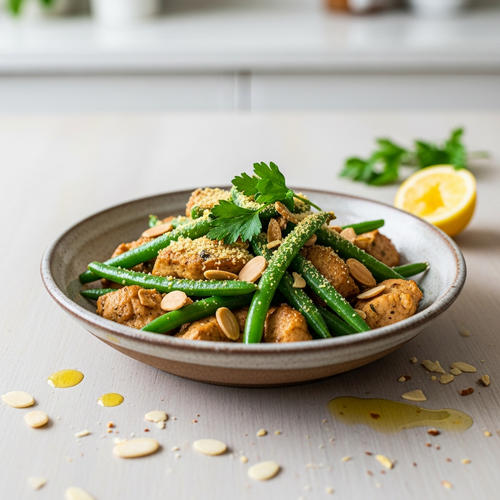
Description: A fast, flavorful, and flexible one-pan meal designed to support fat loss. This recipe is packed with protein and fiber to manage hunger and cravings, making it a perfect weeknight staple for a busy, ADHD-friendly lifestyle.
Prep Time: 5 minutes | Cook Time: 15 minutes
Servings: 2
Macros per Serving | Calories: 325 | Protein: 31g | Fat: 15g | Carbohydrates: 18g
Ingredients
- 1 lb fresh green beans, trimmed
- 8 oz boneless, skinless chicken breast, cut into small, bite-sized pieces
- 1 tbsp olive oil or ¼ cup vegetable broth
- 3 cloves garlic, minced
- 1/4 tsp red pepper flakes (optional)
- 1/4 cup slivered almonds
- 1 tbsp fresh lemon juice
- 2 tbsp nutritional yeast or grated Parmesan cheese
- Salt and freshly ground black pepper to taste
- 1/4 cup chopped fresh parsley
Instructions
- Blanch green beans in a large pot of boiling salted water for 2-3 minutes. Drain and immediately place in an ice water bath to cool. Drain thoroughly.
- While water boils, season chicken pieces with salt and pepper.
- Heat olive oil or broth in a large skillet over medium-high heat. Add chicken and cook until golden brown and cooked through, about 5-7 minutes.
- Add minced garlic and red pepper flakes and cook for 1 more minute until fragrant.
- Add the blanched green beans and almonds to the skillet. Sauté for 3-4 minutes until everything is heated through.
- Remove from heat. Stir in lemon juice, nutritional yeast or Parmesan, and fresh parsley.
- Toss to combine, taste and adjust seasoning, and serve immediately.
Notes
For a shortcut, use pre-trimmed frozen green beans; you can skip the blanching step and add them directly to the skillet after the chicken is cooked, sautéing for a few extra minutes until tender-crisp. Jarred minced garlic and pre-cooked chicken strips can also be used to save time.
FAQs About Green Beans For Weight Loss
Here are some straightforward answers to the most common questions I receive about this green beans recipe.
Are fresh green beans better than frozen for weight loss?
This is a fantastic question because it gets to the heart of our “brutally practical” philosophy. From a pure nutritional standpoint, fresh and frozen green beans are nearly identical. Frozen vegetables are typically flash-frozen at their peak ripeness, which locks in their vitamins and minerals. So, you are not losing out on any nutritional benefits by choosing frozen.
Where they differ is in texture and convenience. Fresh green beans, when cooked properly like in this recipe, will have a distinct “snap” and a firm, crisp-tender bite. Frozen green beans can sometimes have a softer texture after cooking. However, frozen green beans are an incredible convenience food. They come pre-washed and pre-trimmed, removing two steps that can sometimes feel like a huge barrier on a low-motivation day. For weight loss, the most effective green bean is the one you will consistently eat. If the convenience of frozen means you’ll eat your veggies more often, then that is the better choice for you. Don’t let perfect be the enemy of good.
How can I make these green beans without chicken for a vegetarian option?
Making this recipe vegetarian or vegan is incredibly simple. The goal is to swap the chicken with a plant-based protein source to keep the meal balanced and satiating. My top recommendation is to use a block of extra-firm tofu. For the best texture, press the tofu for at least 15 minutes to remove excess water, then cube it and pan-fry it in the skillet until it’s golden and crispy on all sides. Remove it from the pan, proceed with the recipe, and add the crispy tofu back in at the end.
Other great options include using a can of drained and rinsed chickpeas or white beans. Since these are already cooked, you would simply add them to the skillet along with the green beans just to heat them through. You could also use tempeh, edamame, or a plant-based chicken alternative. When you make the swap, be sure to use nutritional yeast instead of Parmesan to keep it fully plant-based. The meal remains high in protein and fiber, making it just as effective for your fitness goals.
Will eating these green beans cause bloating?
This is a common concern, especially for people increasing their fiber intake. Green beans contain both fiber and certain types of carbohydrates (FODMAPs) that can cause gas and bloating in some individuals, particularly those with sensitive digestive systems like IBS. However, for most people, they are well-tolerated and very healthy.
The blanching step in this recipe can actually help make the green beans a bit easier to digest. If you are new to eating a lot of fiber, the key is to start slow. Begin with a smaller portion of this dish and see how your body responds. Make sure you are also drinking plenty of water throughout the day, as water helps fiber move through your digestive system smoothly. Over time, your body will likely adapt to the higher fiber intake. If you continue to experience discomfort, it’s always a good idea to chat with a doctor or registered dietitian.
Can I prepare these green beans ahead for meal prep?
Absolutely. This recipe is fantastic for meal prep, which is a key strategy for staying on track with ADHD. Having healthy, delicious meals ready to go eliminates decision fatigue during a busy week. You have two main ways to prep this meal. The first is to cook the entire dish as directed and portion it into airtight containers. It will last for up to 4 days in the fridge and reheats well, especially in a skillet or air fryer.
For the absolute best texture, you can do a “component prep.” Cook the chicken and store it in a container. Separately, blanch the green beans, drain them well, and store them in their own container. When you’re ready to eat, simply toss the chicken and beans into a hot skillet for a few minutes to heat through, then add the finishing touches like lemon juice and parsley. This takes a little more effort on the day you eat it, but it keeps the green beans perfectly crisp.
What makes this green beans recipe good for managing ADHD symptoms?
This recipe supports the ADHD brain through both its nutritional profile and its structure. First, the nutrition: the meal is high in protein and fiber, a combination that promotes stable blood sugar. Many people with ADHD experience issues with emotional regulation and focus when their blood sugar is on a rollercoaster. This meal provides sustained energy without the spikes and crashes you get from simple carbs and sugar.
Second, the recipe itself is designed to be ADHD-friendly. The steps are simple, linear, and don’t require a lot of complex multitasking. The ingredient list is short and flexible, reducing overwhelm at the grocery store. The cooking time is fast, which respects the ADHD brain’s need for novelty and its dislike of long, drawn-out tasks. By making healthy eating less intimidating and more immediately rewarding, you’re building a system that you can stick with for the long haul, which is the ultimate goal.
Try These High-Protein Recipes Next
If you enjoyed this simple and effective approach to a classic vegetable, here are a few other recipes from our site that follow the same principles.
- Healthy Green Bean Casserole: My high-protein take on the holiday classic, made with a creamy Greek yogurt sauce instead of canned soup. It’s delicious enough for a celebration but healthy enough for a Tuesday.
- One-Pan Chicken and Veggies: The ultimate ADHD-friendly meal. Everything cooks together on a single sheet pan, which means minimal prep and almost no cleanup.
- Easy Green Bean Casserole by This Gal Cooks: A great, straightforward take on the classic comfort food dish, perfect for when you need a simple and reliable recipe.
Building a collection of go-to recipes is the best way to ensure you stay consistent on your fitness journey.