
For most of my life, prime rib was a food that belonged to someone else. It was for fancy restaurant dinners or big, formal holiday meals I saw in movies. It definitely wasn’t something a guy like me, trying to figure out how to lose weight, was supposed to be eating. In my early days of trying to lose fat, I cut out everything that seemed even remotely “indulgent,” and prime rib was at the top of that list.
But that approach always failed me. The more I restricted, the more I craved things, and eventually, I’d give in and spiral. It was during my 65-pound weight loss journey that I finally understood a core truth, especially for an ADHD brain like mine: sustainability beats perfection every single time. True fitness isn’t about restriction; it’s about integration.
That meant I had to find a way to make my favorite foods work for me, not against me. This high-protein prime rib recipe is the perfect example of that philosophy. It’s a method I developed to create a ridiculously flavorful, tender, and satisfying meal that still fits my macros and fat loss goals. It proves that you don’t have to give up incredible food to build a body you’re proud of.
This is how we build a lifestyle, not just a diet.
Skip to My Flexibe Diet Recipe!
Why Prime Rib Is Great For Fat Loss
I know what you might be thinking. “Jacob, how can a rich cut of beef like prime rib possibly be good for fat loss?” It’s a fair question, and it gets to the heart of my entire approach to nutrition. We’ve been taught to fear fat and calories, but the real key to sustainable fat loss is managing hunger and preserving muscle. This recipe is engineered to do exactly that.
First and foremost, this meal is built around protein. A solid portion of prime rib delivers a massive dose of high-quality protein, which is the most satiating macronutrient. That means it keeps you feeling full and satisfied for hours, crushing the cravings that derail so many weight loss efforts. For the ADHD brain, which often seeks dopamine through snacking, a deeply satisfying meal is a powerful tool to prevent mindless eating.
Second, we control the variables. This isn’t a restaurant prime rib swimming in a butter-based sauce. We start by trimming the excess fat cap, leaving just enough to keep the roast moist and flavorful. We use a simple herb rub and a light spray of olive oil instead of slathering it in fat. The au jus is made from low-sodium beef broth and natural pan drippings, not a heavy, cream-laden gravy. This gives you all the flavor with a fraction of the unnecessary calories.
Finally, this is a “cook once, eat for days” meal. Batch cooking is a superpower for anyone with ADHD because it eliminates decision fatigue. You invest the time once and have delicious, high-protein meals ready to go for days. This prevents you from reaching for takeout or processed junk when you’re tired and hungry. This prime rib recipe isn’t a “cheat meal”; it’s a strategic tool for a flexible, satisfying, and sustainable fat loss plan.
Ingredients You’ll Need for Prime Rib
The beauty of a great prime rib is its simplicity. You don’t need a pantry full of complicated ingredients. We’re using a handful of high-impact seasonings to enhance the incredible natural flavor of the beef. This is all about quality over quantity, which also makes the prep work much less overwhelming.
- For the Prime Rib:
- 1 (4-5 pound) bone-in prime rib roast, loin end (first cut)
- 1 tablespoon coarse sea salt
- 1 tablespoon black pepper, coarsely ground
- 1 tablespoon fresh rosemary, finely chopped
- 1 tablespoon fresh thyme leaves, finely chopped
- 4-6 cloves garlic, minced
- Olive oil cooking spray
- For the Au Jus:
- 2 cups low-sodium beef broth
- Pan drippings from the roast
The undisputed star of the show here is the prime rib roast itself. Quality matters immensely. I always recommend getting a bone-in, first cut (also called the loin end) roast. This end is more tender and has a better ratio of meat to fat than the chuck end. Don’t be afraid to talk to your butcher. Ask them for the first cut and have them trim the fat cap to about a quarter-inch thick. This simple conversation can make a huge difference in the final result.
For the rub, using fresh rosemary and thyme provides a fragrant, powerful crust that you just can’t replicate with dried herbs. I know chopping herbs can feel like a chore on a low-motivation day. If you absolutely have to, you can use dried herbs, but reduce the amount to one teaspoon of each. The other non-negotiable is coarse sea salt. The large crystals are essential for drawing out moisture and creating that perfect, savory crust. Do not substitute table salt here; it will dissolve too quickly and make the roast taste overly salty instead of well-seasoned.
How To Make Prime Rib (Step-By-Step)
Making a perfect prime rib seems intimidating, but it’s actually one of the easiest “wow factor” meals you can create. The process is mostly hands-off waiting time. We’ve broken it down into brutally simple steps that are easy to follow, even when your executive function is running low. The key is technique, not complexity.
Step 1: Let the Roast Come to Room Temperature
Take the prime rib out of the fridge a good 2 to 3 hours before you plan to cook it. This is the most overlooked but most critical step. A room-temperature roast cooks evenly from edge to center. A cold roast results in an overcooked exterior and a raw, cool middle. This is a perfect ADHD task initiation hack: set a reminder on your phone for “Take Meat Out” three hours before you want to start the actual cooking process.
Step 2: Preheat Your Oven
Get your oven preheating to 450°F. Do this as soon as you start your prep work so it’s fully heated and ready to go when the roast is. An accurate oven temperature is key for creating the initial crust.
Step 3: Trim Any Excess Fat
Your butcher may have already done this, but double-check. You want a thin layer, about 1/4-inch thick, across the top. This fat will render down during cooking, basting the meat and keeping it incredibly moist. Too much fat, however, will just create a greasy result, so trim off any thick, hard chunks.
Step 4: Combine Rub Ingredients
In a small bowl, mix your coarse sea salt, black pepper, finely chopped rosemary, chopped thyme, and minced garlic. That’s it. Your simple, incredibly flavorful rub is ready.
Step 5: Pat the Roast Dry and Season It
Use paper towels to pat the entire surface of the prime rib completely dry. A dry surface is essential for forming a good crust. Lightly coat the entire roast with olive oil cooking spray, then generously rub the herb and garlic mixture all over, pressing it into the meat so it adheres.
Step 6: Place the Roast in the Pan
Place the seasoned roast in a roasting pan. The magic of a bone-in roast is that the bones act as a natural roasting rack, elevating the meat for even air circulation. Make sure it’s fat-side up and bone-side down.
Step 7: Sear and Roast
Place the roast in the 450°F oven for 15 minutes. This initial high heat creates that delicious, browned crust. After 15 minutes, reduce the oven temperature to 325°F. Continue to roast for about 13-14 minutes per pound for a perfect medium-rare finish.
Step 8: Use a Meat Thermometer
Do not guess your prime rib’s doneness. A reliable meat thermometer is the only way to guarantee perfection. For medium-rare, pull the roast from the oven when the internal temperature hits 125°F in the thickest part, avoiding the bone. The temperature will continue to rise as it rests.
Step 9: Rest the Meat
Transfer the roast to a cutting board and tent it loosely with aluminum foil. Let it rest for a minimum of 20 to 30 minutes. This step is non-negotiable. It allows the juices that have been pushed to the center during cooking to redistribute throughout the meat, ensuring every slice is tender and juicy.
Step 10: Make the Au Jus While Resting
While the roast rests, make the simple pan sauce. Tilt the roasting pan and use a spoon to skim off as much of the clear fat as you can. Place the pan over medium heat on your stovetop, pour in the low-sodium beef broth, and bring it to a simmer. Use a wooden spoon to scrape up all those browned bits from the bottom of the pan. Let it simmer for 5-10 minutes to concentrate the flavor.
Step 11: Slice and Serve
After resting, slice the prime rib against the grain to your desired thickness. Serve immediately with the warm au jus drizzled over the top.
How To Serve Prime Rib (ADHD-Friendly)
Once you’ve cooked the perfect prime rib, serving it should be the easy part. The goal is to build a balanced, satisfying plate without creating a mountain of extra work or dishes. Since the prime rib delivers our protein and fat, we just need to add some fiber and maybe a smart carbohydrate source to complete the meal. For ADHD brains, simple and pre-planned is the name of the game.
To avoid the “what do I make with this?” spiral that can happen at dinner time, decide on your sides before you even start the roast. My go-to strategy is to use sides that require minimal prep or can cook in the time the roast is resting. This keeps the entire process streamlined and low-stress. You’ve already done the main work; let the sides be easy wins.
Here are a few of my favorite ADHD-friendly side pairings:
- Steam-in-Bag Green Beans: This is the ultimate convenience hack. These are found in the freezer aisle and cook perfectly in the microwave in about five minutes. No chopping, no cleaning pots. Just steam, open, and season with a little salt and pepper.
- Simple Roasted Asparagus: While the prime rib is resting for 30 minutes, you have a perfect window to roast a vegetable. Toss asparagus with olive oil spray, salt, and pepper on a baking sheet. Roast at 400°F for 15-20 minutes until tender.
- Bagged Caesar Salad Kit: Let someone else do the work. A good quality salad kit gives you greens, dressing, croutons, and cheese all in one bag. It’s a fresh, crunchy side with zero prep time.
- Microwaveable Sweet Potato: For a healthy carb source, a single sweet potato cooked in the microwave is incredibly easy. Just poke it with a fork a few times and microwave for 5-7 minutes until soft.
When it comes to portioning, a food scale is a great tool, but you can also use your hand as a guide. A serving of protein is typically about the size and thickness of your palm. Enjoy every bite, eat slowly, and let that high-protein meal signal to your brain that you are full and satisfied. This is how you enjoy incredible food while staying on track with your fat loss goals.
How To Store, Reheat, and Reuse Prime Rib
One of the best things about making a prime rib is the leftovers. This is meal prep gold. Cooking once and having a delicious, high-protein ingredient ready for several future meals is a cornerstone of the ADHD FIT lifestyle. It saves time, reduces decision fatigue, and ensures you have healthy options on hand for those busy or low-motivation days. But storing and reheating it properly is key to making sure it stays just as delicious as it was on day one.
First, for storage, allow the prime rib to cool down completely before packing it away. You can store it whole or sliced. I prefer to slice what I need and store the rest of the roast unsliced to retain moisture. Place it in an airtight container or wrap it tightly in plastic wrap and then foil. It will keep well in the refrigerator for up to four days. For longer-term storage, you can freeze individual slices in freezer bags for up to three months.
Reheating is where most people go wrong. Microwaving prime rib is a recipe for disaster; it will become rubbery, gray, and tough. The goal is to reheat it gently to preserve its texture and flavor.
- The Skillet Method (My Favorite): Place slices of prime rib in a non-stick skillet over medium-low heat. Add a tablespoon or two of leftover au jus, beef broth, or even just water to the pan. Cover the skillet and let the steam gently warm the meat through, about 3-5 minutes. This keeps it incredibly moist and tender.
- The Oven Method: If you’re reheating a larger portion, this works well. Place the beef in an oven-safe dish, add a splash of broth, cover tightly with foil, and warm in a low-temperature oven (around 250°F) for 15-20 minutes, or until just heated through.
Don’t just think of leftovers as a repeat of the first meal. Get creative and repurpose the meat to keep things interesting. A few simple ideas include dicing it up for a high-protein breakfast scramble with eggs and veggies, slicing it thin for incredible steak sandwiches on whole-wheat bread, or chopping it to use as a hearty topping for a big, nutrient-dense salad.
Easy Swaps & Variations for Prime Rib
While this recipe is fantastic as written, one of our core principles is flexibility. Life happens. You might not have fresh herbs, or you might want to adjust the flavor profile. A recipe should be a guideline, not a rigid set of rules. This is especially true for those of us with ADHD; we need options that work with what we have on hand and what our brains can handle on any given day. The goal is to get a delicious, healthy meal on the table, not to achieve perfection.
Here are some simple and practical swaps you can make to this prime rib recipe without sacrificing flavor or your fitness goals. These variations are designed to accommodate different tastes, budgets, and energy levels.
- Herb and Spice Variations: If you don’t have fresh rosemary and thyme, don’t sweat it. A pre-made, low-sodium steak seasoning blend from the store is a great shortcut. You can also use 1.5 teaspoons each of dried rosemary and thyme. For a different flavor profile, try adding a teaspoon of smoked paprika or onion powder to the rub for a smokier, more savory crust.
- Garlic Shortcut: Mincing fresh garlic can sometimes feel like one step too many. On those days, feel free to substitute 1.5 to 2 teaspoons of garlic powder in the rub. It will still provide that essential garlic flavor without the chopping and sticky fingers.
- Beef Cut Alternatives: A bone-in prime rib roast can be pricey and is often reserved for special occasions. You can absolutely use this same cooking method on a boneless ribeye roast or even a top sirloin roast. A boneless roast will cook a bit faster, so rely on your meat thermometer. A sirloin roast is much leaner, so be extra careful not to overcook it.
- Au Jus Flavor Boost: If you want to add more depth to your au jus, feel free to add a splash of red wine or Worcestershire sauce to the pan along with the beef broth. Let it simmer and reduce to concentrate those rich flavors.
Remember, the most important techniques are bringing the meat to room temperature, using a meat thermometer, and letting it rest. As long as you follow those key steps, you can feel free to experiment with the seasonings and make this prime rib recipe your own.
High-Protein Prime Rib for Fat Loss
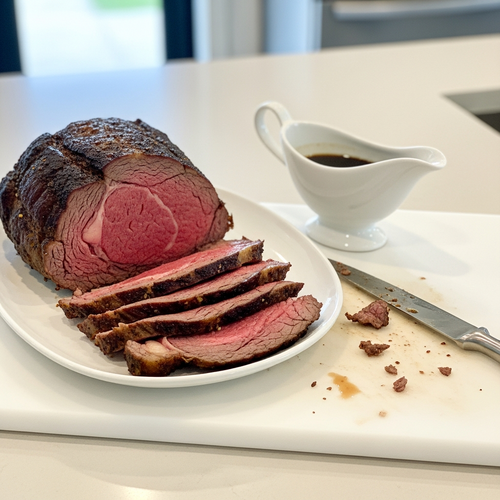
Description: A simple, flavorful prime rib recipe designed to fit into a flexible fat-loss plan. This method creates a perfectly tender, juicy roast with a savory herb crust, proving you don’t have to sacrifice amazing food to reach your goals.
Prep Time: 15 minutes | Cook Time: 75 minutes
Servings: 8
Macros per Serving | Calories: 350 | Protein: 45g | Fat: 20g | Carbohydrates: 1g
Ingredients
- 1 (4-5 pound) bone-in prime rib roast, loin end (first cut)
- 1 tablespoon coarse sea salt
- 1 tablespoon black pepper, coarsely ground
- 1 tablespoon fresh rosemary, finely chopped
- 1 tablespoon fresh thyme leaves, finely chopped
- 4-6 cloves garlic, minced
- Olive oil cooking spray
- 2 cups low-sodium beef broth
Instructions
- Remove roast from refrigerator 2-3 hours before cooking to reach room temperature.
- Preheat oven to 450°F. In a small bowl, combine salt, pepper, rosemary, thyme, and garlic.
- Pat roast dry with paper towels. Spray lightly with olive oil and rub seasoning mixture over the entire surface.
- Place roast, fat-side up, in a roasting pan. Roast at 450°F for 15 minutes.
- Reduce oven temperature to 325°F and continue roasting for 13-14 minutes per pound, or until a meat thermometer reads 125°F for medium-rare.
- Remove roast from oven, transfer to a cutting board, and tent loosely with foil. Rest for at least 20-30 minutes.
- While resting, skim fat from the roasting pan. Place pan on stovetop over medium heat, add beef broth, and scrape up browned bits. Simmer for 5-10 minutes to create au jus.
- Slice roast against the grain and serve with warm au jus.
Notes
Do not skip the resting step; it is critical for a juicy, tender result. Using a meat thermometer is the only way to ensure your prime rib is cooked to the perfect temperature.
FAQs About Prime Rib For Weight Loss
Here are some straightforward answers to the most common questions I receive about this prime rib recipe.
Can I really eat prime rib and still lose weight?
Yes, you absolutely can. This is one of the biggest mental hurdles people have to overcome. Fat loss is determined by being in a consistent calorie deficit over time, not by eliminating specific foods. The reason this prime rib recipe works so well for weight loss is because it’s strategically designed to help you maintain that deficit without feeling deprived.
The massive protein content keeps you full for a very long time, which significantly reduces the likelihood of snacking on high-calorie, low-nutrient foods later. By trimming the excess fat and making a simple, broth-based au jus instead of a creamy sauce, we control the overall calorie and fat content. It’s a perfect example of flexible eating: you plan for a rich, satisfying meal, account for its macros, and it fits beautifully into a healthy, sustainable lifestyle. Restriction leads to binges; integration leads to consistency.
What is the best cut of prime rib to buy for a healthier recipe?
This is a great question because the cut you choose can make a difference. A “prime rib” isn’t one specific muscle; it’s a roast that can come from different sections of the beef rib. For a leaner option that’s still incredibly tender, you want to ask your butcher for the “first cut,” also known as the “loin end.” This section is closer to the back of the animal and has a large, single eye of meat with less internal fat compared to the other end.
The other end, called the “second cut” or “chuck end,” contains more fat and connective tissue. While still delicious, the first cut gives you a better meat-to-fat ratio, which is ideal when you’re managing your macros for fat loss. Also, consider the grade. “Prime” is the highest grade with the most marbling (fat). Choosing a “Choice” grade roast will still be wonderfully flavorful but typically has slightly less fat, making it a smarter choice for this purpose.
How do I track macros for this prime rib recipe?
Tracking macros for a large cut of meat like prime rib can seem tricky, but it’s straightforward with a food scale and a tracking app. The most accurate way is to weigh your individual portion after it’s cooked. Open your app (like MyFitnessPal or Cronometer) and search for an entry like “Beef Ribeye Roast, roasted, trimmed to 1/4″ fat.”
The macros provided in the recipe card are an estimate for a 6-ounce serving. Keep in mind that every single roast will have a slightly different fat-to-meat ratio, so these numbers will always be a close approximation. The key is consistency. As long as you use the same tracking method each time, you’ll have reliable data to work with. Don’t let the pursuit of perfect tracking get in the way of enjoying a fantastic, goal-supporting meal.
Is the au jus necessary, or does it add too many calories to the prime rib?
The au jus is highly recommended, and the great news is that it adds a negligible number of calories. This is a common misconception because we often confuse “au jus” with “gravy.” Gravy is typically thickened with flour or cornstarch and enriched with butter or cream, which can add significant calories and fat. Our au jus, however, is simply the natural pan drippings combined with low-sodium beef broth.
After we skim the majority of the rendered fat from the pan, we’re left with concentrated beef flavor. Simmering it with broth creates a thin, savory sauce that adds immense moisture and flavor for very few calories. In fact, using the au jus makes the meal more satisfying and delicious, which can prevent you from seeking out higher-calorie condiments like creamy horseradish sauce. It’s a high-impact, low-calorie flavor booster.
My prime rib always turns out tough. What am I doing wrong?
If your prime rib is tough, it’s almost certainly due to one of three critical errors in the process. First is cooking it cold. If you take the roast straight from the fridge to the oven, the outside will cook much faster than the inside. By the time the center reaches your desired temperature, the outer layers will be overcooked and tough. Letting it sit at room temperature for 2-3 hours is essential for even cooking.
The second, and most common, culprit is overcooking. Even a few degrees can take a tender roast into tough territory. The only way to prevent this is by using a reliable instant-read meat thermometer. Guessing based on time-per-pound is just an estimate. Pull the roast out of the oven when it’s 5-10 degrees *below* your target temperature, as it will continue to cook while it rests. Finally, you must let it rest for at least 20 minutes after cooking. Cutting into it too soon causes all the internal juices to run out, leaving you with dry, tough meat. Nailing these three steps will guarantee a tender result every time.
Try These High-Protein Recipes Next
If you enjoyed this simple approach to a classic beef dish, here are a few other recipes you’ll love.
- ADHD-Friendly Pot Roast – This recipe uses a slow cooker to do all the work, creating a fall-apart tender roast and vegetables with minimal effort.
- Simple High-Protein Beef Stew – A hearty, comforting stew packed with protein and veggies that’s perfect for meal prepping on a Sunday.
- Herb Crusted Prime Rib Recipe – For another take on a flavorful prime rib, this recipe offers a slightly different herb blend and technique that’s also delicious.
These all follow the same principles of being high in protein, easy to make, and perfect for a busy lifestyle.