
For most of my life, I thought brisket was something you only ate at a summer barbecue. It was a special occasion food, usually slathered in a sugary sauce and served with sides that would send my blood sugar on a wild ride. When I started my fitness journey, losing 65 pounds before I was even medicated for ADHD, I assumed delicious, tender brisket was off the menu for good.
I was wrong. It took me a while to figure it out, but I realized the problem was not the meat itself. The problem was how it was prepared and what it was served with. This understanding was a game changer for me. It allowed me to bring back one of my favorite comfort foods in a way that actually supported my fat loss goals.
I developed this oven-braised brisket recipe out of a need for something deeply satisfying that wouldn’t derail my progress. I needed a meal that was high in protein, packed with flavor, and simple enough to make on a day when my executive function was low. This recipe is the result. It’s a workhorse meal that feels like a treat, and it’s become a cornerstone of my meal prep strategy.
It’s proof that you don’t have to eat boring food to get fit. You just need a better system.
Skip to My Flexibe Diet Recipe!
Why Brisket Is Great For Fat Loss
When people think about fat loss foods, brisket is probably not the first thing that comes to mind. Many of us associate it with heavy, fatty meals. But when prepared correctly, brisket is an absolute powerhouse for creating a lean, sustainable lifestyle, especially for those of us with ADHD.
The number one principle we follow at ADHD FIT is protein first. Protein is the most satiating macronutrient. It keeps you feeling full and satisfied for hours, which is our best defense against the dopamine-seeking cravings that can lead to mindless snacking. A generous portion of this brisket delivers a huge dose of high-quality protein, helping you hit your macro goals and preserve muscle mass while you’re in a calorie deficit.
We manage the fat content strategically in this recipe. First, we start with a “flat cut” of brisket, which is naturally leaner than the fattier “point cut.” Then, we trim most of the external fat cap. The slow braising process renders out much of the remaining fat into the cooking liquid, which we then skim off before serving. You get all the rich, beefy flavor without the excess fat and calories.
Finally, this is a perfect batch-cook recipe. For an ADHD brain, reducing decision fatigue is a massive win. You invest a few hours on one day to cook this brisket, and you have a delicious, high-protein base for multiple meals throughout the week. No more staring into the fridge wondering what to make. You just grab a portion, add a simple side, and you have a perfect fat-loss meal ready in minutes.
Ingredients You’ll Need for Brisket
I designed this recipe to use simple, accessible ingredients that deliver maximum flavor without a lot of fuss. You won’t find anything here that you can’t get at a regular grocery store. The magic is in the method, not in some obscure, expensive spice.
Here’s the full list of what you’ll need.
- 1 (4-5 pound) beef brisket, flat cut
- 1 tablespoon smoked paprika
- 2 teaspoons garlic powder
- 1 teaspoon ground cumin
- 2 teaspoons coarse sea salt
- 1 teaspoon black pepper
- 1 tablespoon avocado oil or olive oil spray
- 2 large yellow onions, sliced
- 8 cloves garlic, smashed
- 4 carrots, roughly chopped
- 4 celery stalks, roughly chopped
- 4 cups low-sodium beef broth
- 1/4 cup apple cider vinegar
- 2 tablespoons tomato paste
- 2 bay leaves
The key ingredient that gives this brisket its incredible, smoky flavor without a smoker is the smoked paprika. Don’t substitute this with regular or sweet paprika if you can help it. The smoked variety provides a deep, barbecue-like essence that is absolutely essential to the final taste.
For the brisket itself, make sure you get the “flat cut.” Ask your butcher if you’re unsure. The flat is a leaner, more uniform piece of meat that slices beautifully and is perfect for this braising method. Using a low-sodium beef broth is also important, as it allows you to control the final saltiness of the dish. The cooking liquid will reduce and concentrate, so starting with a lower sodium base prevents it from becoming overly salty.
How To Make Brisket (Step-By-Step)
Making this brisket is mostly a hands-off process. The oven does almost all of the work. Our job is just to set it up for success with a few simple, crucial steps at the beginning. Don’t be intimidated by the long cook time. That’s what makes it so tender and flavorful.
Step 1: Trim and Season the Brisket
First, trim the fat cap on the brisket down to about a quarter-inch layer. We want some fat for flavor and moisture, but we don’t need the thick layer it often comes with. In a small bowl, mix your smoked paprika, garlic powder, cumin, salt, and pepper. This is your rub. Pat the brisket dry and coat the entire surface with this spice mix. If you have the time and forethought, wrap it and let it sit in the fridge overnight. If you’re like me and decide to make this on a whim, even 30 minutes will do.
Step 2: Sear for Flavor
Preheat your oven to 300°F. In a large Dutch oven or other heavy, oven-safe pot, heat your oil or use cooking spray over medium-high heat. Carefully place the brisket in the pot. We want to sear it for 4-5 minutes per side. The goal is to create a deep, brown crust. This isn’t about cooking the meat through. It’s about the Maillard reaction, which creates a massive amount of flavor. Once seared, move the brisket to a plate.
Step 3: Build the Braising Liquid
Toss your sliced onions, garlic, carrots, and celery into the same pot. Sauté them for about 5-7 minutes until they soften up. Stir in the tomato paste and let it cook for a minute to deepen its flavor. Now, pour in the beef broth and apple cider vinegar. Use a wooden spoon to scrape all those browned, flavorful bits off the bottom of the pot. This is called deglazing, and it’s non-negotiable for a rich sauce. Bring it all to a simmer.
Step 4: Braise Low and Slow
Return the brisket to the pot, placing it on top of the vegetables. Add the bay leaves. Cover the pot with a tight-fitting lid and transfer it to your preheated oven. Now for the easy part. Let it cook for 4-5 hours. An ADHD tip: set a timer on your phone and then walk away. Go to the gym, get some work done, or just relax. The brisket is done when it’s so tender you can easily pull it apart with a fork.
Step 5: Rest, Skim, and Slice
This is critical. Remove the brisket from the pot and let it rest on a cutting board for at least 20-30 minutes. This allows the juices to redistribute, ensuring the meat is moist. While it rests, strain the cooking liquid and skim the fat from the top. You can use a fat separator or just a large spoon. Finally, slice the brisket thinly against the grain. This is key for tenderness. Serve it immediately with the skimmed cooking liquid (au jus) spooned over the top.
How To Serve Brisket (ADHD-Friendly)
The brisket is our high-protein centerpiece. Now we need to build a balanced, satisfying meal around it without creating a ton of extra work. For the ADHD brain, simplicity is sustainability. We want to create meal “templates” that remove the guesswork and decision fatigue from dinnertime.
My go-to template is simple: Protein + Smart Carb + Veggie. With the brisket already cooked, the other two components should be as easy as possible. This is where we embrace store-bought shortcuts and freezer hacks. There are no extra points for making everything from scratch on a busy weeknight.
Here are a few of my favorite ADHD-friendly ways to serve this brisket:
- With Microwavable Sweet Potatoes: Many stores sell pre-cooked, vacuum-sealed sweet potatoes or even frozen mashed sweet potatoes. They heat up in minutes and provide a perfect, nutrient-dense carb source to pair with the rich brisket.
- Over a Bagged Salad Kit: For a super fast, low-carb meal, pile some warm brisket on top of your favorite bagged salad kit. The savory meat pairs incredibly well with a crunchy, fresh salad base.
- Alongside Steamed Veggies: Keep bags of frozen broccoli florets, green beans, or a vegetable medley on hand. A few minutes in the microwave and you have a perfectly cooked vegetable side. Drizzle a little of the brisket au jus over them for extra flavor.
- In a Whole-Wheat Wrap: For a quick lunch, place a few slices of brisket in a high-fiber, whole-wheat wrap with a handful of spinach or a scoop of coleslaw mix. It’s a delicious, portable meal that hits your macros.
The goal is to make healthy eating feel effortless. By having the main protein cooked and relying on convenient sides, you can assemble a fantastic, fat-loss-friendly meal in less than five minutes. This prevents the “I have nothing to eat” spiral that often leads to ordering takeout.
How To Store, Reheat, and Reuse Brisket
One of the best things about this brisket recipe is that it makes a generous amount. This isn’t just a single meal. It’s an investment in your future self. For those of us with ADHD, having delicious, ready-to-eat food on hand is one of the most powerful tools for staying consistent with our nutrition.
Proper storage is key to making your leftovers last. Once the brisket has cooled, I recommend storing the sliced meat and the au jus in separate airtight containers. This prevents the meat from getting soggy and gives you more control when reheating. They will keep perfectly in the refrigerator for up to four days. For longer storage, you can freeze both the meat and the jus for up to three months.
When it comes to reheating, our main goal is to preserve moisture. The microwave works, but be careful not to overdo it. The best method is to place the slices in a small pan with a splash of the au jus, cover it, and warm it gently over low heat. This steams the meat and brings it back to life without drying it out.
But leftovers don’t have to be boring. Here are a few ways to reuse your brisket for entirely new meals:
- Quick Brisket Tacos: Warm up some chopped brisket and serve it in corn or whole-wheat tortillas with a simple topping of salsa, diced avocado, and a squeeze of lime.
- High-Protein Breakfast Hash: Dice up some brisket and pan-fry it with leftover potatoes (or frozen hash browns) and onions. Top it with a fried egg for an incredibly satisfying breakfast that will keep you full all morning.
- Brisket Stuffed Baked Potatoes: Take a baked potato, fluff up the inside, and top it with a generous portion of heated brisket, a dollop of Greek yogurt, and some chives.
- Savory Brisket Quesadillas: Sandwich some chopped brisket and a sprinkle of cheese between two high-fiber tortillas and pan-fry until golden and crispy.
Thinking of leftovers as “ingredients” instead of just “leftovers” is a mindset shift that can make your entire week of eating easier and more enjoyable.
Easy Swaps & Variations for Brisket
One of our core principles is that a plan has to be flexible to be sustainable. Life happens. You might not have the exact ingredients on hand, or you might need to adapt a recipe to fit your budget or dietary needs. This brisket recipe is incredibly forgiving and easy to modify.
Don’t let a missing ingredient stop you from making this. The goal is a delicious, high-protein meal, not perfection. This isn’t a baking recipe where precision is everything. Think of it as a template you can adjust based on what you have and what you like.
Here are some simple swaps and variations you can try:
- Spice Rub Variations: If you don’t have smoked paprika, you can use regular paprika and add a half-teaspoon of chipotle powder or a pinch of cayenne for a smoky heat. No cumin? Try some chili powder or a bit of coriander. You can also add onion powder for another layer of savory flavor.
- Change the Vegetables: The carrots, celery, and onion create a classic flavor base called a mirepoix. But if you’re out of one of them, don’t worry. You could use leeks, parsnips, or even some roughly chopped mushrooms to build that savory foundation for the braising liquid.
- Slow Cooker or Crock-Pot Method: This recipe is perfect for the slow cooker. Simply follow the steps for searing the brisket and sautéing the vegetables on the stovetop. Then, transfer everything to your slow cooker. Cook on low for 8-10 hours or on high for 4-5 hours. It’s an amazing set-it-and-forget-it option.
- Adding a Touch of Sweetness: While this recipe is designed to be savory, if you prefer a hint of sweetness in your barbecue flavor, you can add a tablespoon of coconut sugar or a sugar-free maple syrup substitute to the braising liquid.
Remember, the best recipe is the one you actually make. Use these ideas to adapt the recipe so it works for you, your kitchen, and your life. Consistency will always beat intensity, and a flexible approach is the key to long-term success.
ADHD-Friendly Oven Brisket
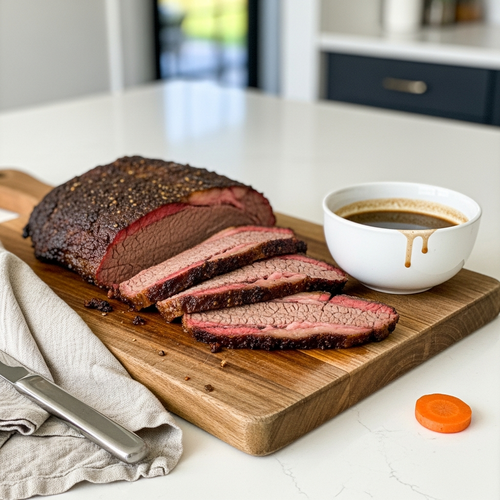
Description: A simple, incredibly tender oven-braised brisket recipe designed for fat loss and an ADHD-friendly lifestyle. High in protein, packed with flavor, and perfect for meal prep.
Prep Time: 20 minutes | Cook Time: 4-5 hours
Servings: 10
Macros per Serving | Calories: 245 | Protein: 34g | Fat: 11g | Carbohydrates: 2g
Ingredients
- 1 (4-5 pound) beef brisket, flat cut
- 1 tablespoon smoked paprika
- 2 teaspoons garlic powder
- 1 teaspoon ground cumin
- 2 teaspoons coarse sea salt
- 1 teaspoon black pepper
- 1 tablespoon avocado oil or olive oil spray
- 2 large yellow onions, sliced
- 8 cloves garlic, smashed
- 4 carrots, roughly chopped
- 4 celery stalks, roughly chopped
- 4 cups low-sodium beef broth
- 1/4 cup apple cider vinegar
- 2 tablespoons tomato paste
- 2 bay leaves
Instructions
- Preheat oven to 300°F (150°C). Trim brisket fat cap to 1/4-inch. Combine all spices and rub over the entire brisket.
- In a large Dutch oven over medium-high heat, sear the brisket for 4-5 minutes per side until a brown crust forms. Remove and set aside.
- Add onions, garlic, carrots, and celery to the pot and sauté for 5-7 minutes until softened. Stir in tomato paste and cook for 1 minute.
- Pour in beef broth and vinegar, scraping the bottom of the pot. Bring to a simmer.
- Return brisket to the pot. Add bay leaves. Cover tightly and transfer to the oven.
- Cook for 4-5 hours, until fork-tender.
- Remove brisket and let it rest for 20-30 minutes before slicing against the grain.
- Strain the cooking liquid and skim the fat from the surface. Serve the brisket with the liquid (au jus).
Notes
For best results, let the spice-rubbed brisket rest in the fridge for at least 2 hours or overnight. If you don’t have a Dutch oven, you can sear in a skillet and transfer to a deep roasting pan, covering tightly with aluminum foil.
FAQs About Brisket For Weight Loss
Here are some straightforward answers to the most common questions I receive about this brisket recipe.
Is brisket too fatty for a weight loss diet?
This is a fantastic question and a common misconception. The key is in the cut of meat and the preparation method. Brisket has two parts: the point and the flat. The point is significantly fattier, while the flat is much leaner. This recipe specifically calls for the flat cut to start with a lower fat content from the get-go.
From there, we take active steps to manage the fat. We physically trim the thick fat cap off the brisket before cooking, leaving only a thin layer for flavor. The “low and slow” braising method is also our friend here. As the brisket cooks, a lot of the intramuscular fat renders out and melts into the cooking liquid. The final, crucial step is to skim that rendered fat off the liquid before serving. What you’re left with is a tender, flavorful, high-protein piece of meat without the excessive fat and calories you might associate with traditional barbecue brisket.
Can I make this brisket recipe in a slow cooker?
Absolutely. This recipe adapts beautifully to the slow cooker, which is one of my favorite ADHD-friendly kitchen tools. The “set it and forget it” nature of a slow cooker is perfect for low-energy or busy days. The process is nearly identical at the beginning. You will still want to do the searing step in a skillet on the stovetop. Searing creates the flavorful crust that you simply cannot achieve in a slow cooker alone.
After you sear the brisket and sauté the vegetables, transfer everything into the basin of your slow cooker. Pour the braising liquid over the top, cover it, and set it to cook on low for 8 to 10 hours, or on high for 4 to 5 hours. The result will be just as tender and delicious. This method is a lifesaver for days when you want a home-cooked meal without being tied to the kitchen.
Why is my brisket tough and not tender?
Tough brisket is almost always caused by one of two things: it was undercooked, or it was sliced incorrectly. Brisket is a tough cut of meat full of connective tissue. The magic of the “low and slow” cooking method is that it gives this tissue time to break down and transform into gelatin, which makes the meat incredibly moist and tender. If you pull it out of the oven too soon, that process hasn’t completed. The best test is to stick a fork in it and give it a twist. If it shreds easily, it’s done. If it resists, it needs more time.
The second culprit is slicing with the grain instead of against it. Muscle fibers in brisket run in long, parallel strands. If you slice parallel to these fibers (with the grain), you’re left with long, chewy, stringy pieces. By slicing perpendicular to the fibers (against the grain), you shorten them into tiny pieces, making the meat exceptionally tender to the bite. Always take a moment to identify the direction of the grain before you start slicing.
Do I have to use a Dutch oven for this brisket?
A Dutch oven is the ideal tool because it’s heavy, distributes heat evenly, and can go from the stovetop directly into the oven. However, you absolutely do not need one to make this recipe. We believe in being brutally practical, and that means using the tools you have. If you don’t have a Dutch oven, you can use any large, oven-safe pot with a tight-fitting lid.
If you don’t have a pot that can go from stovetop to oven, you can use a two-pan method. Simply do the searing and vegetable sautéing steps in a regular skillet on the stove. Then, transfer the brisket, vegetables, and all the liquid into a deep roasting pan or a large casserole dish. Cover it very tightly with two layers of heavy-duty aluminum foil to create a good seal, and then place it in the oven. The key is trapping the steam, so make sure that cover is secure.
What’s the best way to meal prep with this brisket?
This brisket is a meal prep dream because it sets you up for an entire week of easy, high-protein meals. The best strategy is to think about “future you” on a busy Tuesday night. After the brisket has cooked and rested, I recommend slicing the entire thing at once. This removes a step for future meals. Then, portion the sliced brisket into individual meal prep containers.
In each container, add a serving of brisket and then spoon a few tablespoons of the defatted au jus over the meat. This is crucial because it will keep the meat moist and flavorful when you reheat it. You can store these individual portions in the fridge for up to 4 days. When you’re ready for a meal, you just grab a container, pair it with a quick carb like a microwavable potato or rice, and a frozen vegetable. This system eliminates decision fatigue and makes it incredibly simple to stay on track with your goals.
Try These High-Protein Recipes Next
If you loved the simple, satisfying approach of this brisket recipe, here are a few other high-protein meals you should try.
- ADHD-Friendly Pot Roast: This uses a similar low-and-slow method to create a fall-apart tender roast with potatoes and carrots, all in one pot.
- Simple High-Protein Beef Stew: A classic comfort food, this beef stew is packed with protein and veggies to keep you full and satisfied for hours.
- Easy Barbecue Brisket by This Gal Cooks: If you’re looking for a more traditional BBQ flavor profile, this recipe offers a great alternative with a tangy barbecue sauce.
Building a rotation of reliable, easy recipes is the secret to long-term consistency and success.