
Mac and cheese has always been my ultimate comfort food. Growing up, it was the go-to meal after a tough day or for a weekend celebration. It was pure, cheesy happiness in a bowl. When I started my fat loss journey, losing over 65 pounds, I thought I had to say goodbye to it forever. It felt like a necessary sacrifice.
Most mac and cheese recipes are a festival of fat and carbs with very little protein. They taste amazing for about ten minutes, and then the food coma hits. That kind of meal just didn’t fit into the sustainable lifestyle I was building. It would spike my blood sugar, leave me feeling sluggish, and trigger more cravings later.
But I refuse to live in a world without mac and cheese. That’s just not a world I want to be part of. So, I got to work. I needed a version that was just as comforting and delicious but packed with protein to keep me full and on track with my goals. This high-protein baked mac and cheese is the result of that mission. It’s creamy, it’s cheesy, it’s got that crispy baked topping, and it fuels your body instead of weighing it down. It’s proof that you don’t have to give up your favorite foods to get fit.
Skip to My Flexibe Diet Recipe!
Why Baked Mac and Cheese Is Great For Fat Loss
When you hear baked mac and cheese, you probably don’t think “fat loss food.” I get it. Traditional recipes are loaded with butter, heavy cream, and refined flour, making them incredibly calorie-dense and low in protein. That’s a combination that works against your fitness goals.
But this recipe flips the script entirely. We build it around our core principles: protein first, hunger management second. The foundation of this dish isn’t empty carbs; it’s protein. We start with protein pasta, which immediately gives us a huge advantage in both protein and fiber compared to traditional pasta. This helps with satiety, meaning you feel fuller for longer after eating.
The real magic, however, is in the cheese sauce. Instead of a heavy, fat-laden base, we use a powerhouse combination of blended low-fat cottage cheese and non-fat Greek yogurt. This is a game-changer. It creates an incredibly creamy, tangy, and rich sauce that is absolutely packed with protein. This high protein content is crucial for fat loss. It helps preserve muscle mass while you’re in a calorie deficit, and it has a higher thermic effect of food, meaning your body burns more calories just digesting it.
By focusing on these ingredients, we transform a classic comfort food into a macro-friendly meal. Each serving helps you hit your protein target, manages hunger, and crushes cravings without the post-meal crash. It’s the perfect example of flexible eating. You get to enjoy a satisfying, delicious meal that actively supports your body composition goals. It proves that consistency in your diet doesn’t have to be boring or restrictive.
Ingredients You’ll Need for Baked Mac and Cheese
The beauty of this recipe is its simplicity. We use smart, accessible ingredients to build a macro-friendly meal without sacrificing that classic flavor you love. There are no weird, hard-to-find items here. Everything should be available at your local grocery store.
Here’s exactly what you’ll need to make this high-protein baked mac and cheese.
-
8 oz. protein pasta (such as chickpea or lentil-based)
-
1 cup low-fat cottage cheese
-
½ cup plain non-fat Greek yogurt
-
½ cup skim milk
-
1 tbsp all-purpose flour
-
1 tsp olive oil
-
2 cups shredded sharp cheddar cheese, divided
-
½ cup grated Parmesan cheese
-
½ tsp garlic powder
-
½ tsp onion powder
-
¼ tsp paprika
-
Salt and black pepper to taste
-
2 tbsp panko breadcrumbs
The key players here are the low-fat cottage cheese and protein pasta. The cottage cheese is our secret weapon for a creamy, high-protein sauce. When blended, it becomes incredibly smooth, and you won’t even notice it’s there. Just make sure you get a good quality low-fat version; full-fat can sometimes be a bit grainy.
For the cheese, I highly recommend buying a block of sharp cheddar and shredding it yourself. Pre-shredded cheeses are coated in starches to prevent clumping, which can make your sauce gritty. Taking two extra minutes to shred your own makes a massive difference in how well the cheese melts, resulting in a much smoother sauce. It’s a small step that elevates the entire dish.
How To Make Baked Mac and Cheese (Step-By-Step)
One of my rules for ADHD-friendly cooking is to keep the steps simple and the process straightforward. This recipe is designed to be low-stress, even on days when your executive function is running on empty. We’ll break it down into manageable chunks.
ADHD Tip: Read through all the steps before you start. It’s called “mise en place,” a fancy term for getting your stuff together. Pull out all your ingredients and tools first. This prevents that mid-recipe panic when you realize you’re missing something.
Step 1: Preheat Oven and Cook Pasta
First things first, get your oven preheating to 375°F (190°C). While it’s warming up, lightly grease a baking dish. Next, bring a large pot of salted water to a boil and cook your protein pasta according to the package directions. You want it al dente, which means it should still have a slight bite. It will finish cooking in the oven, and overcooking it now will result in mushy mac and cheese.
Step 2: Create the Creamy Protein Base
While the pasta is cooking, it’s time to make our secret sauce base. Combine the cottage cheese, Greek yogurt, and skim milk in a blender. Blend it on high until it’s completely smooth and creamy. You should see no lumps or curds. This step is crucial for achieving that velvety texture we want in our cheese sauce.
Step 3: Make the Roux and Thicken the Sauce
In a large saucepan, heat the olive oil over medium heat. Whisk in the all-purpose flour and cook for about one minute, whisking constantly. This is called a roux, and it’s what will help thicken our sauce. Slowly pour the blended cottage cheese mixture into the saucepan, whisking the entire time to prevent any lumps from forming. Continue cooking and whisking for about 3-5 minutes until the sauce starts to thicken up.
Step 4: Melt the Cheese and Season
Remove the saucepan from the heat. It’s important to do this before adding the cheese to prevent it from getting grainy or separating. Gradually stir in 1 ½ cups of the shredded cheddar and all of the Parmesan cheese. Stir until everything is melted and the sauce is smooth. Now, season it with garlic powder, onion powder, paprika, salt, and pepper.
Step 5: Combine, Top, and Bake
Once your pasta is drained, add it to the saucepan with the cheese sauce. Stir everything together until the pasta is fully coated in that cheesy goodness. Pour the mixture into your prepared baking dish. In a small bowl, mix the remaining ½ cup of cheddar with the panko breadcrumbs. Sprinkle this mixture evenly over the top. Bake for 20-25 minutes, until the sauce is bubbly and the topping is golden brown. Let it rest for a few minutes before serving to allow the sauce to set.
How To Serve Baked Mac and Cheese (ADHD-Friendly)
Turning a single recipe into a balanced, satisfying meal is key for a sustainable fat loss plan. For those of us with ADHD, mealtime can be chaotic, so having a simple serving strategy helps reduce decision fatigue and keeps us on track. This baked mac and cheese is fantastic on its own, but pairing it correctly makes it even better.
The main goal is to add volume and micronutrients without piling on a ton of extra calories. Protein and fiber are your best friends for satiety. Since this dish is already packed with protein, our focus for pairings will be on fiber from vegetables.
Here are some brutally practical ways to serve this up:
-
With a Simple Green Vegetable. My go-to is frozen broccoli florets or green beans. I just steam them in the microwave for a few minutes while the mac and cheese is baking. A sprinkle of salt and pepper is all they need. It’s a zero-effort way to add a serving of veggies to your plate.
-
Alongside a Big Salad. Use a store-bought salad kit to make things even easier. Just be mindful of the dressing. Use about half the packet or opt for a light vinaigrette. The fresh, crunchy texture of a salad is a great contrast to the creamy mac and cheese.
-
Mixed with Shredded Chicken. If you want to boost the protein even more, stir in some pre-cooked shredded rotisserie chicken. This is one of my favorite freezer hacks. I buy a rotisserie chicken, shred the meat, and freeze it in portioned bags for quick meal additions.
ADHD Tip: Plate your meal before you sit down to eat. Decide on your portion of mac and cheese and fill the rest of your plate with your chosen vegetable. This visual trick helps with portion control and prevents the “I’ll just have one more scoop” spiral that can happen when serving family-style from the baking dish.
How To Store, Reheat, and Reuse Baked Mac and Cheese
Meal prep is a lifeline for anyone with a busy schedule, especially when you have ADHD. Cooking once and eating multiple times saves mental energy and ensures you have a healthy meal ready to go. This baked mac and cheese is perfect for leftovers, but storing and reheating it correctly is important to keep it tasting great.
The goal is to avoid that dry, oily mess that can happen when you reheat cheesy pasta. With a few simple tricks, your leftovers will be just as creamy and delicious as when they first came out of the oven. This makes it a perfect dish to cook on a Sunday for easy lunches or dinners throughout the week.
Here’s the best way to handle your leftovers:
-
Storing: Let the mac and cheese cool down completely before storing. This prevents condensation from making it watery. Transfer it to an airtight container and store it in the refrigerator for up to 4 days. For an ADHD-friendly pro tip, portion it out into individual meal prep containers right away. That way, you have grab-and-go meals ready, which eliminates a future decision-making step.
-
Reheating in the Microwave: This is the quickest method. Place a serving in a microwave-safe bowl. Add a splash of milk (about 1-2 tablespoons) and stir it in. This rehydrates the sauce and brings back its creaminess. Cover the bowl with a damp paper towel and microwave for 60-90 seconds, then stir. Continue heating in 30-second intervals until it’s warmed through.
-
Reheating in the Oven: This method is best for preserving the crispy topping. Place the leftovers in an oven-safe dish, add a splash of milk, and stir. Cover with foil and bake at 350°F (175°C) for about 15-20 minutes, or until heated through. For the last few minutes, you can remove the foil to re-crisp the top.
Don’t be afraid to reuse the leftovers in new ways. You can stuff it into bell peppers and bake them, or use it as a filling for a high-protein quesadilla. Getting creative helps prevent boredom and reduces food waste.
Easy Swaps & Variations for Baked Mac and Cheese
One of the core principles at ADHD FIT is flexibility. A recipe is a template, not a rigid set of rules. Life happens. You might not have an ingredient, you might be on a tighter budget, or you might just want to change things up. This baked mac and cheese recipe is incredibly forgiving and easy to adapt.
Don’t let a missing ingredient derail your plan to cook a healthy meal. The goal is consistency, not perfection. A “good enough” meal that you actually make is always better than the “perfect” meal you keep putting off. Here are some simple swaps you can make based on what you have on hand.
Here are a few tested and approved variations:
-
Pasta Choices: While I recommend protein pasta for the macro boost, you can absolutely use whole wheat pasta or regular pasta if that’s what you have. Just be aware that this will change the final protein and calorie counts.
-
Cheese Blends: Feel free to get creative with the cheese! A mix of Monterey Jack and cheddar will give you a milder, gooier result. Adding a bit of smoked gouda can add a fantastic deep, smoky flavor. As long as it’s a good melting cheese, it will work.
-
Add-Ins for Flavor and Nutrients: This is where you can really customize. Stir in some steamed chopped broccoli, spinach, or cauliflower for a veggie boost. For extra protein and flavor, add cooked crumbled bacon, diced ham, or shredded buffalo chicken.
-
Gluten-Free Option: To make this recipe gluten-free, simply use your favorite gluten-free pasta and swap the all-purpose flour for a gluten-free all-purpose blend. The rest of the ingredients are naturally gluten-free.
Remember, cooking should support your life, not complicate it. Use these variations to make this baked mac and cheese recipe work for you, your pantry, and your preferences. The best healthy recipe is the one you’ll actually make and enjoy consistently.
High-Protein Baked Mac and Cheese
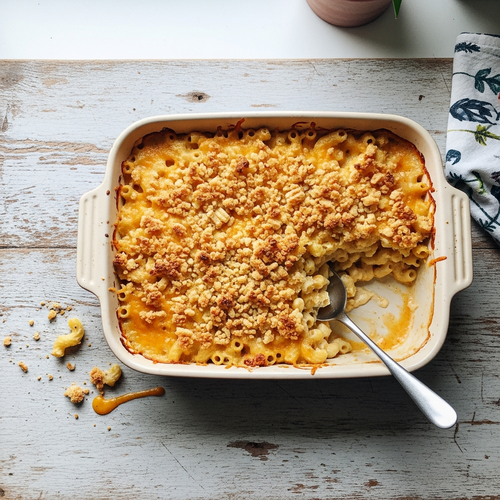
Description: A creamy, cheesy, and satisfying baked mac and cheese that’s secretly packed with protein to support your fat loss goals. This is pure comfort food, rebuilt to fuel your body and keep you full for hours.
Prep Time: 10 minutes | Cook Time: 35 minutes
Servings: 4
Macros per Serving | Calories: 581 | Protein: 41g | Fat: 27g | Carbohydrates: 43g
Ingredients
- 8 oz. protein pasta
- 1 cup low-fat cottage cheese
- ½ cup plain non-fat Greek yogurt
- ½ cup skim milk
- 1 tbsp all-purpose flour
- 1 tsp olive oil
- 2 cups shredded sharp cheddar cheese, divided
- ½ cup grated Parmesan cheese
- ½ tsp garlic powder
- ½ tsp onion powder
- ¼ tsp paprika
- Salt and black pepper to taste
- 2 tbsp panko breadcrumbs
Instructions
- Preheat oven to 375°F (190°C) and grease a baking dish.
- Cook pasta until al dente; drain.
- While pasta cooks, blend cottage cheese, Greek yogurt, and milk until smooth.
- In a saucepan, heat oil, whisk in flour for 1 minute. Slowly whisk in the blended dairy mixture and cook until it thickens (3-5 mins).
- Remove from heat. Stir in 1 ½ cups cheddar and all the Parmesan until melted. Stir in seasonings.
- Add cooked pasta to the sauce and combine well. Pour into the baking dish.
- Mix remaining ½ cup cheddar and panko; sprinkle over the top.
- Bake for 20-25 minutes until bubbly and golden. Let rest before serving.
Notes
For the creamiest sauce, shred your own cheddar cheese from a block. Pre-shredded cheese contains anti-caking agents that can make the sauce grainy.
FAQs About Baked Mac and Cheese For Weight Loss
Here are some straightforward answers to the most common questions I receive about this baked mac and cheese recipe.
Can you really eat baked mac and cheese and still lose weight?
Yes, you absolutely can. The key is to shift your mindset from “good foods vs. bad foods” to understanding the nutritional makeup of what you’re eating. Weight loss comes down to being in a consistent calorie deficit. This recipe is specifically designed to make that easier. It’s high in protein, which is incredibly important for satiety. Protein helps you feel full and satisfied, reducing the likelihood that you’ll overeat later or struggle with cravings.
Unlike traditional baked mac and cheese, which is mostly carbs and fat, our version balances the macros. The protein from the special pasta, cottage cheese, and Greek yogurt keeps you full, supports muscle retention, and requires more energy to digest. By making these smart swaps, we create a dish that fits into your daily calorie and protein targets, allowing you to enjoy a favorite comfort food without derailing your progress. It’s the perfect example of flexible dieting in action.
How is this baked mac and cheese recipe ADHD-friendly?
I design all my recipes with the ADHD brain in mind, focusing on reducing overwhelm and making the process as simple as possible. First, the ingredient list uses common, easy-to-find items. There are no obscure specialty foods you have to hunt for. Second, the steps are broken down into small, manageable tasks. I encourage “mise en place,” or getting everything ready beforehand, to combat the working memory challenges that can make following a recipe stressful.
The recipe also incorporates shortcuts, like using a blender to create the sauce base, which is fast and foolproof. I also provide tips for storage and meal prep, like portioning leftovers immediately. This removes future barriers and decisions when you’re low on energy. The goal is to create a reliable, repeatable system that delivers a delicious result without demanding a huge amount of executive function. It’s about working with your brain, not against it.
Will my kids or picky eaters notice the cottage cheese in this baked mac and cheese?
This is probably the number one question I get, and the answer is a resounding no! When you blend the cottage cheese with the Greek yogurt and milk, it becomes completely smooth and creamy. The texture becomes undetectable in the final sauce, and the mild, slightly tangy flavor blends perfectly with the sharp cheddar and Parmesan. It simply tastes like a rich, creamy cheese sauce.
I’ve served this to my own kid and countless friends who swear they hate cottage cheese, and not a single one has ever guessed the secret ingredient. It’s a fantastic way to sneak in a significant amount of protein without anyone being the wiser. If you’re nervous, just make sure you blend it very well. You want it to be perfectly liquid and smooth before adding it to the saucepan. It’s the ultimate stealth health hack.
Can I prepare this baked mac and cheese ahead of time?
Yes, this is a great recipe to prep in advance, which is a huge win for busy weeknights. You have two main options. You can fully assemble the mac and cheese in the baking dish, but don’t add the panko topping yet. Cover it tightly with foil and refrigerate for up to two days. When you’re ready to eat, sprinkle the topping on and bake as directed. You may need to add about 5-10 minutes to the baking time since it’s starting from cold.
Your second option is to cook it completely, let it cool, and store it in the fridge. Then you can simply reheat individual portions as needed throughout the week using the microwave or oven methods I described earlier. Both strategies work well, so you can choose whichever best fits your schedule. Having a dish like this ready to go is a game-changer for staying consistent with your nutrition goals.
What makes the topping on this baked mac and cheese crispy?
The perfect baked mac and cheese needs that crunchy, golden-brown topping. It provides a fantastic textural contrast to the creamy pasta underneath. We achieve this with a very simple combination of panko breadcrumbs and a little bit of extra shredded cheddar cheese. Panko breadcrumbs are key here. They are lighter and flakier than regular breadcrumbs, which allows them to toast up beautifully and become incredibly crispy in the oven.
Mixing the panko with cheese before sprinkling it on top is also important. The fat from the cheese helps to toast the breadcrumbs, giving them a richer flavor and a deeper golden color. This simple two-ingredient topping provides that classic, irresistible crunch that elevates the dish from a simple stovetop mac to a true baked comfort food masterpiece. Don’t skip this step; it’s what makes it special.
Try These High-Protein Recipes Next
If you loved this macro-friendly take on a classic, here are a few other recipes designed to keep you full and on track.
-
Stovetop High-Protein Mac and Cheese: My original, even quicker version that comes together in one pot on the stove. Perfect for a weeknight when you need comfort food fast.
-
Healthy & High-Protein Baked Ziti: Another classic pasta bake, remade with a focus on protein and flavor. It’s a perfect family-friendly meal that’s great for meal prep.
-
Baked Four Cheese Macaroni and Cheese: For when you want to indulge, this recipe from This Gal Cooks is a fantastic, traditional take on the classic with a glorious blend of four cheeses.
Give them a try and see how easy it is to enjoy the foods you love while building a fitter, more sustainable lifestyle.