
I used to think that losing weight meant giving up my favorite comfort foods. And at the top of that list was a rich, hearty bolognese. It was the meal my mom made, the one I craved on a cold day, and the one I was sure was off-limits if I ever wanted to get fit.
For years, I believed the lie that fat loss had to be miserable. That it meant endless chicken and broccoli. But as I lost 65 pounds and learned how my ADHD brain works with food, I realized the opposite is true. The only sustainable plan is one you actually enjoy.
So, I went on a mission to create a bolognese that fit my goals. It had to be high in protein to crush cravings. It needed to be simple enough to make on a low-energy day. And it absolutely had to taste like the real deal.
This recipe is the result. It’s a workhorse in my kitchen. It’s packed with flavor, loaded with protein and fiber, and makes enough for a week of easy meals. This is the bolognese that proves you can build a body you love without giving up the food you love.
Skip to My Flexibe Diet Recipe!
Why Bolognese Is Great For Fat Loss
When you look at this recipe, you might just see a classic pasta sauce. But every single ingredient was chosen with a specific purpose for fat loss, especially for the way an ADHD brain operates. It’s not about restriction. It’s about building a meal that works for you, not against you.
First, we lead with protein. This is non-negotiable for sustainable fat loss. The combination of lean ground beef and red lentils delivers a massive protein punch. Protein is the most satiating macronutrient, meaning it keeps you feeling full and satisfied for hours. This is your number one weapon against mindless snacking and intense cravings that can derail your progress.
Second, this bolognese is designed for hunger management. The protein, combined with the fiber from the lentils and all the vegetables, creates a ton of volume for fewer calories than a traditional, fat-heavy sauce. It fills up your stomach and sends signals to your brain that you are full. You can eat a generous, satisfying portion without blowing through your calorie budget.
Finally, it’s a perfect batch-cooking recipe. For those of us with ADHD, decision fatigue is real. Having a big pot of delicious bolognese ready to go in the fridge is a lifesaver. It removes the guesswork and the executive function drain of figuring out what to eat for lunch or dinner. You cook once and have several high-protein, goal-supportive meals ready to go. Consistency is everything, and this recipe makes it easy.
Ingredients You’ll Need for Bolognese
This ingredient list is all about maximizing flavor and nutrition while keeping things simple and accessible. There are no fancy, hard-to-find items here. Just a few key players that come together to make something truly satisfying.
Here’s what you’ll need to grab:
- 1 tbsp olive oil
- 1 large yellow onion, finely chopped
- 2 medium carrots, finely chopped
- 2 celery stalks, finely chopped
- 4 cloves garlic, minced
- 1 lb 96% lean ground beef
- 1/2 cup dry red lentils, rinsed
- 1 (28-ounce) can crushed tomatoes
- 1 (6-ounce) can tomato paste
- 2 cups low-sodium beef broth
- 1 tsp dried oregano
- 1 tsp dried basil
- 1/2 tsp red pepper flakes (optional)
- 1/4 cup chopped fresh parsley, for garnish
- 1/4 cup grated Parmesan cheese, for garnish
* Salt and freshly ground black pepper to taste
The secret ingredient here, the one that gives this bolognese its nutritional edge, is the red lentils. They dissolve into the sauce as it simmers, adding a creamy thickness you’d normally get from extra fat. More importantly, they add a significant amount of plant-based protein and fiber, making the sauce incredibly filling.
A quick note on the ground beef. I specify 96% lean ground beef because it provides a great protein-to-fat ratio. This keeps the calories and saturated fat in check while still delivering that classic beefy flavor. If you can only find 93% or 90% lean, that’s perfectly fine. Just be sure to drain the excess fat thoroughly after browning it.
How To Make Bolognese (Step-By-Step)
Making this bolognese is mostly a hands-off process once you get it going. The key is giving it time to simmer and let the flavors meld together. Don’t rush it. Put on a podcast, let the house fill with an amazing smell, and trust the process.
Step 1: Sauté Your Vegetables
Heat the olive oil in a large pot or a Dutch oven over medium heat. Add your finely chopped onion, carrots, and celery. This trio is called a soffritto, and it’s the flavor base of your entire sauce. Cook them, stirring occasionally, for about 8 to 10 minutes until they’ve softened and the onion is translucent. Don’t brown them. You just want to sweat out their moisture and build a sweet, aromatic foundation.
ADHD Tip: The thought of chopping three vegetables can be enough to make you order takeout. Use a food processor with a chopping attachment. It takes 30 seconds and the texture is perfect for this sauce.
Step 2: Add The Garlic
Add the minced garlic to the pot and cook for just one more minute, stirring constantly. Garlic burns easily, and burnt garlic will make your whole sauce bitter. You just want to cook it until it becomes fragrant. As soon as you can smell it, you’re ready for the next step.
Step 3: Brown The Beef
Add the lean ground beef to the pot. Use a wooden spoon or a spatula to break it up into small pieces. Continue cooking until it’s fully browned. Because we’re using lean beef, there won’t be much excess fat, but if you see any, carefully drain it from the pot.
Step 4: Stir In Lentils and Tomatoes
Now it’s time to add the powerhouse ingredients. Stir in the rinsed red lentils, the big can of crushed tomatoes, and the can of tomato paste. Mix everything together well, scraping up any browned bits from the bottom of the pot. The tomato paste adds a deep, concentrated tomato flavor.
Step 5: Add Liquids and Seasonings
Pour in the beef broth. This will thin everything out for now, but it will thicken up beautifully as it simmers. Add the dried oregano, dried basil, and red pepper flakes if you like a little heat. Give it a good pinch of salt and a few grinds of black pepper. Remember, you can always add more salt later, so don’t go overboard here.
Step 6: Simmer The Sauce
Bring the sauce to a gentle simmer. Once it starts bubbling, reduce the heat to low, put the lid on, and let it do its thing. The magic happens here. Let it cook for at least one hour, but if you have the time, letting it go for two or even three hours will result in an incredibly rich, deep flavor. Just be sure to stir it every 20-30 minutes to prevent it from sticking to the bottom.
Step 7: Adjust Consistency
After it has simmered, check the thickness. The lentils will have absorbed a lot of liquid. If the bolognese is thicker than you’d like, simply stir in a splash of beef broth or water until it reaches the consistency you prefer.
Step 8: Final Seasoning
This is the most important step. Taste your sauce. Does it need more salt? More pepper? Maybe a bit more oregano? Adjust the seasonings now until the flavor is exactly where you want it. A well-seasoned sauce is the difference between a good meal and a great one.
Step 9: Serve It Up
Your high-protein bolognese is ready. Serve it over your favorite base. I love using high-protein pasta or zucchini noodles, but the options are endless. We’ll get into more serving ideas in the next section.
Step 10: Garnish and Enjoy
Before you dig in, top your bowl with a sprinkle of fresh parsley and a little grated Parmesan cheese. These small touches add a fresh brightness and a salty, savory kick that elevates the whole dish. Now, enjoy the meal you just made.
How To Serve Bolognese (ADHD-Friendly)
The beauty of this bolognese is its versatility. Having a batch in the fridge is like having a secret weapon for easy, healthy meals. The goal is to make healthy eating feel effortless, reducing the number of decisions you have to make when you’re tired or hungry.
The most classic way to serve it is, of course, over pasta. To keep it aligned with our fat loss goals, I highly recommend seeking out a high-protein or fiber-rich pasta. Brands made from chickpeas, lentils, or edamame are fantastic. They’ll boost the total protein of your meal even higher, keeping you full for a very long time.
But you don’t have to stop at pasta. Here are a few other simple, ADHD-friendly ways to serve your bolognese:
- Over Zucchini or Spaghetti Squash: For a lower-carb, high-volume option, serve the sauce over roasted spaghetti squash or spiralized zucchini noodles. You can buy pre-spiralized noodles to save a step.
- On Top of a Baked Potato: A hot baked sweet potato or regular potato topped with a scoop of bolognese and a little cheese is an incredibly satisfying and balanced meal.
- With a Side of Roasted Veggies: Keep it simple. Just serve a bowl of the sauce with a big side of steamed or roasted broccoli. You get your protein, fiber, and veggies all in one go.
My best tip for making this work with a busy brain is to pre-portion it. When the sauce is done cooking and has cooled slightly, portion it out into single-serving containers. That way, when you need a meal, you just grab one container, heat it up, and pair it with your base of choice. No measuring, no thinking. Just a delicious, goal-supporting meal ready in minutes.
How To Store, Reheat, and Reuse Bolognese
Meal prep is only effective if you actually eat the food you prepare. Proper storage is key to making sure your delicious bolognese stays fresh and appealing all week long. This sauce stores incredibly well, and the flavor often gets even better the next day.
Once the bolognese has cooled to room temperature, transfer it to airtight containers. It will last in the refrigerator for up to 5 days. This is perfect for a week’s worth of lunches or a few easy dinners. Just make sure your container is sealed tightly to prevent it from drying out.
This recipe is also amazing for the freezer. It’s a great way to “pay it forward” to your future self. For freezing:
- Portion It Out: I recommend freezing it in single or double-serving portions. This makes it much faster to thaw and prevents you from having to defrost a giant block of sauce when you only need a little.
- Use Freezer-Safe Containers: Freezer-safe glass containers or heavy-duty plastic tubs work well. You can also use zip-top freezer bags. Just squeeze out all the air before sealing to prevent freezer burn.
- Label Everything: This is a crucial step for the ADHD brain. Use a marker to write “High-Protein Bolognese” and the date on the container or bag. This eliminates the freezer mystery game a month from now. It will keep in the freezer for up to 3 months.
To reheat, you can simply microwave a portion until it’s hot, stirring halfway through. Or, you can gently reheat it in a small saucepan on the stove over medium-low heat. If it seems too thick, add a splash of water or broth to loosen it up. The sauce can be used again over pasta, as a topping for polenta, or even as a filling for a healthy sloppy joe on a whole wheat bun.
Easy Swaps & Variations for Bolognese
The best recipes are the ones you can adapt to what you have on hand or what fits your personal preferences. This bolognese is incredibly flexible. Don’t be afraid to experiment and make it your own. The core principles of protein and veggies remain the same.
Here are a few simple swaps and variations that work great:
- Change The Protein: If you’re not a fan of beef, you can easily substitute it with 1 lb of lean ground turkey or ground chicken. The process is exactly the same. For a vegetarian version, you can omit the meat and double the amount of lentils.
- Add More Veggies: This sauce is a perfect vehicle for sneaking in extra vegetables. Finely chopped mushrooms, bell peppers, or even zucchini can be added in with the onion, carrots, and celery at the beginning. They will melt into the sauce and add more nutrients and volume.
- Use Different Lentils: I use red lentils because they break down and disappear into the sauce, but brown or green lentils will also work. Just note that they hold their shape more, so the final texture will be a bit different, but still delicious.
- Make It Spicy: If you love heat, don’t be shy with the red pepper flakes. You can also add a finely chopped jalapeño along with the garlic for an extra kick.
Remember, the goal is consistency, not perfection. Use these swaps to make the recipe work for your budget, your pantry, and your taste buds. A recipe you can easily adapt is a recipe you’ll come back to again and again, which is exactly what we want for building a sustainable lifestyle.
High-Protein Bolognese For Fat Loss
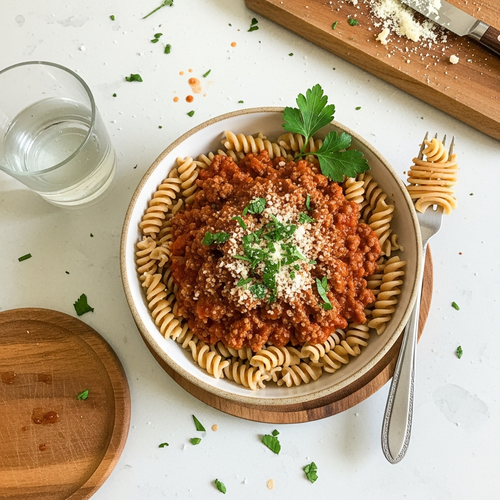
Description: A rich, hearty, and incredibly satisfying bolognese sauce packed with lean protein and fiber to support fat loss goals and keep you full for hours. Perfect for ADHD-friendly meal prep.
Prep Time: 15 minutes | Cook Time: 1 hour 15 minutes
Servings: 8
Macros per Serving | Calories: 345 | Protein: 31g | Fat: 11g | Carbohydrates: 32g
Ingredients
- 1 tbsp olive oil
- 1 large yellow onion, finely chopped
- 2 medium carrots, finely chopped
- 2 celery stalks, finely chopped
- 4 cloves garlic, minced
- 1 lb 96% lean ground beef
- 1/2 cup dry red lentils, rinsed
- 1 (28-ounce) can crushed tomatoes
- 1 (6-ounce) can tomato paste
- 2 cups low-sodium beef broth
- 1 tsp dried oregano
- 1 tsp dried basil
- 1/2 tsp red pepper flakes (optional)
- Salt and freshly ground black pepper to taste
- 1/4 cup chopped fresh parsley, for garnish
- 1/4 cup grated Parmesan cheese, for garnish
Instructions
- Heat olive oil in a large pot over medium heat. Add onion, carrots, and celery and cook for 8-10 minutes until softened.
- Add garlic and cook for 1 more minute until fragrant.
- Add ground beef, break it apart, and cook until browned. Drain any excess fat.
- Stir in rinsed lentils, crushed tomatoes, and tomato paste.
- Pour in beef broth and add oregano, basil, red pepper flakes, salt, and pepper.
- Bring to a simmer, then reduce heat to low, cover, and cook for at least 1 hour, stirring occasionally.
- Adjust consistency with more broth if needed, and taste to adjust seasonings.
- Serve hot, garnished with fresh parsley and Parmesan cheese.
Notes
For a shortcut, use a bag of pre-chopped mirepoix (onion, carrot, celery mix) from the produce section. The sauce tastes even better the next day, making it ideal for meal prep.
FAQs About Bolognese For Weight Loss
Here are some straightforward answers to the most common questions I receive about this bolognese recipe.
Can I make this bolognese in a slow cooker?
Yes, absolutely. A slow cooker is a fantastic tool for this recipe, especially on days when you lack the energy or focus to monitor a pot on the stove. It makes the process even more hands-off, which is a huge win for the ADHD brain. To adapt it, you’ll still want to do the initial steps on the stovetop for maximum flavor.
First, sauté the onion, carrots, and celery in a pan as directed. Add the garlic, then brown the ground beef and drain the fat. This browning step is crucial because it creates a deep, savory flavor that you won’t get if you just put raw meat in the slow cooker. Once the beef is browned, transfer the entire mixture to your slow cooker. Add the rest of the ingredients: lentils, tomatoes, broth, and seasonings. Stir everything together, put the lid on, and cook on low for 6 to 8 hours or on high for 3 to 4 hours. The long, slow simmer will make the meat incredibly tender and the flavors will meld beautifully.
Is this high-protein bolognese recipe good for meal prep?
This recipe isn’t just good for meal prep; it’s practically designed for it. Batch cooking is one of the most effective strategies for anyone, but especially for those of us with ADHD who struggle with executive functions like planning and task initiation. Cooking a large pot of this bolognese on a Sunday can set you up for a week of success.
The flavors actually deepen and improve after a day or two in the fridge, so your leftovers will be even more delicious. I recommend portioning the sauce into individual, microwave-safe containers as soon as it cools. This removes all friction during a busy week. When you’re hungry, you don’t have to think, measure, or decide. You just grab a container, heat it up, and pair it with a quick carbohydrate source like high-protein pasta, zucchini noodles, or even a simple side salad. It’s a system that prevents decision fatigue and makes it easy to stick to your nutrition goals, even on low-motivation days.
How can I make this bolognese recipe even lower in carbs?
This bolognese recipe is already quite balanced, but if you’re following a lower-carbohydrate diet, there are a few simple adjustments you can make. The main sources of carbohydrates in the sauce itself are the lentils and the tomatoes. While I don’t recommend removing the tomatoes as they are the base of the sauce, you can reduce the lentils or omit them entirely. If you omit them, you might want to add some finely chopped mushrooms to help replicate the hearty texture they provide. The overall sauce will be a bit thinner, so you may need to simmer it a little longer to reduce it down.
The most significant way to lower the carbs of the overall meal is by being mindful of what you serve the bolognese with. Instead of traditional pasta, serve it over zucchini noodles (zoodles), spaghetti squash, or cauliflower rice. You can also serve it over a bed of steamed green beans or sautéed spinach. These vegetable bases add lots of volume and nutrients for very few carbs, creating a huge, satisfying meal that will easily fit into a low-carb eating plan.
What makes this bolognese different from a traditional recipe?
A traditional Italian bolognese is a masterpiece of slow-cooked flavor, but it’s often very rich and high in fat. Classic recipes frequently call for fatty cuts of meat like pancetta, whole milk or cream, and a significant amount of olive oil or butter. While delicious, this can result in a meal that’s very high in calories and saturated fat, making it difficult to fit into a fat loss plan regularly.
My version keeps the soul of the original but makes strategic tweaks for better macros. We use 96% lean ground beef to slash the fat content while keeping the protein high. The biggest difference is the addition of red lentils. This is not traditional at all, but they serve a brilliant dual purpose. They add a substantial amount of plant-based protein and fiber, which increases satiety and makes the meal more filling. They also break down during the long simmer, creating a creamy thickness that mimics the richness you’d get from dairy or extra fat, but for a fraction of the calories. It’s a modern, fitness-focused take on a classic.
Can I use ground turkey instead of beef in this bolognese?
Definitely. Ground turkey is an excellent substitution for ground beef in this bolognese recipe. It’s a great way to change up the flavor profile or accommodate a personal preference. When choosing ground turkey, I recommend using a 93/7 blend. While you can use the super-lean 99% fat-free ground turkey breast, it has a tendency to become dry and a bit crumbly during a long simmer. The 93/7 blend has just enough fat to keep the meat moist and tender without adding a significant number of calories, especially since you’ll be draining any excess fat after browning it.
The cooking process remains exactly the same. Brown the ground turkey with the vegetables just as you would with the beef. Since turkey has a milder flavor than beef, you might find you want to be a little more generous with your seasonings. Consider adding a splash of Worcestershire sauce or a pinch of smoked paprika along with the other seasonings to add a bit more depth and savory flavor. The final result will be a lighter, but equally delicious and high-protein, bolognese.
Try These High-Protein Recipes Next
If you enjoyed this simple and satisfying bolognese, here are a few other recipes you might want to try next.
- The Best High-Protein Lasagna Recipe: All the comforting, cheesy flavor of classic lasagna, but with macros that support your fitness goals.
- Easy High-Protein Spaghetti Sauce Recipe: A quicker, weeknight-friendly meat sauce that’s perfect when you need a healthy meal on the table fast.
- Easy Bolognese Sauce with Egg Fettuccine: A more traditional take on bolognese that offers rich, classic flavors for a weekend dinner.
Building a library of go-to recipes is one of the best ways to stay consistent on your journey.